Is Sky Pencil Japanese Holly Invasive?
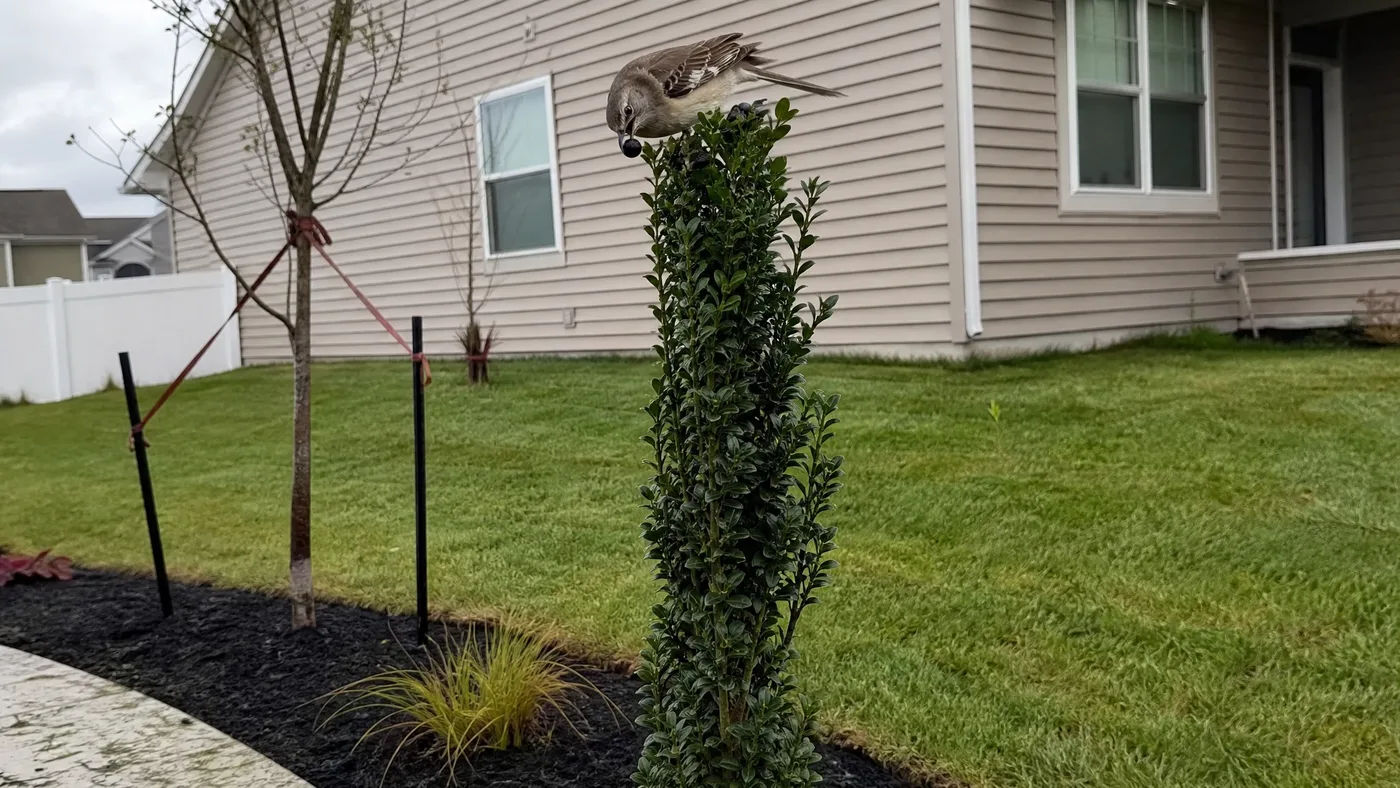
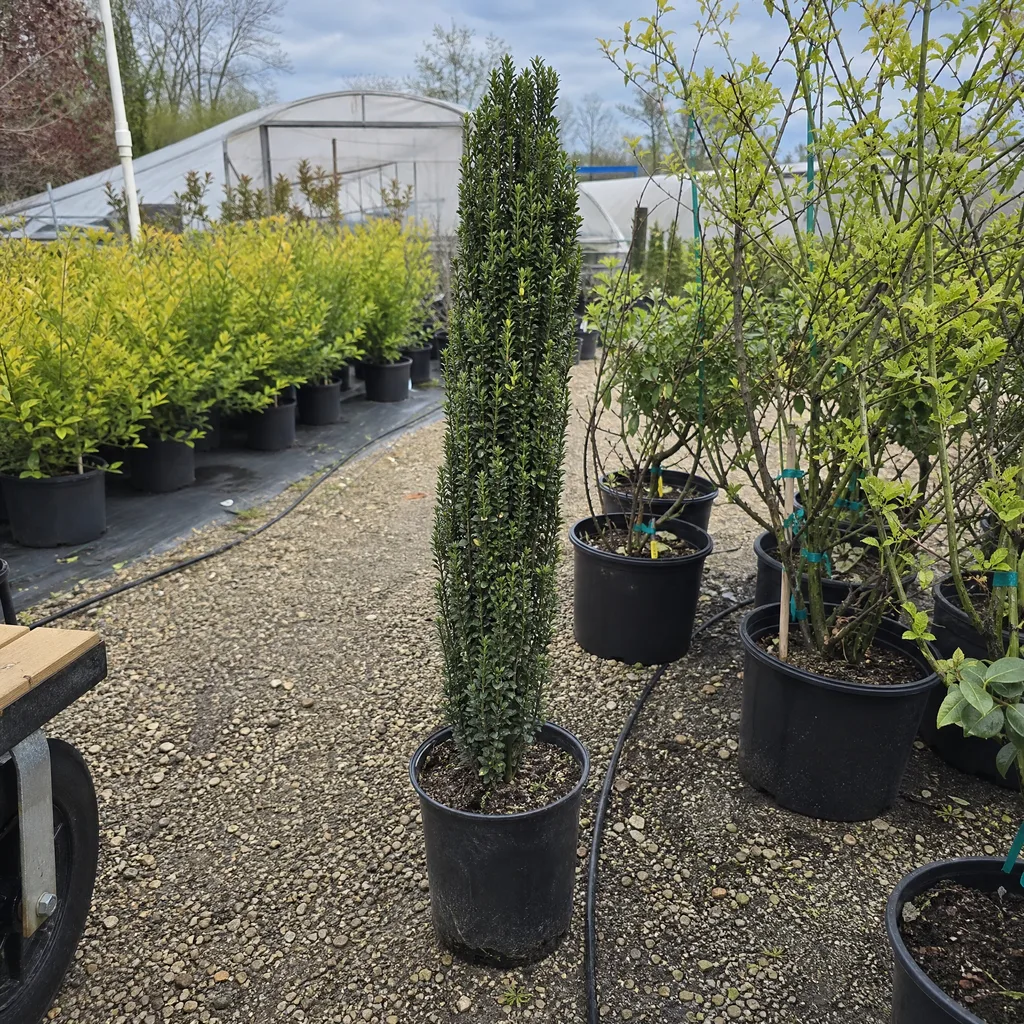
The number to hold onto is 12 to 18 inches. That is how wide a Sky Pencil grows, only 12 to 18 inches across on a plant that stands 8 to 10 feet tall, and a plant built like that has little room to take over anything.
"Invasive" is a word people throw around loosely. Strictly, it describes a non-native plant that spreads on its own into wild areas and crowds out what grows there. Sky Pencil gets the label mostly through its family name and its cousins, not through anything it does in a yard.
We'll walk you through the wild-seedling claim, the reputation of the holly genus and the berry, sucker and root worries one at a time, then give you a verdict on each belief and the few precautions that still make sense.
Does Sky Pencil Japanese Holly Seed Itself Into Woods?
The belief goes like this: you plant a few hollies, birds scatter seed, and in ten years the woods behind the house are full of little hollies. To test it, start with what a seedling requires. A seed needs fruit, and fruit needs pollination.
Japanese holly is dioecious, meaning that male and female flowers are on separate plants, so a female only fruits when a male is close enough to pollinate it. Sky Pencil is a single cultivar, and it is an all-female cultivar that needs a male pollinizer to produce fruit. A hedge of Sky Pencils with no male holly anywhere near it has nothing to make seed with.
The flowers themselves are easy to miss. They are small, greenish white and, in the Arkansas extension's words, of no ornamental significance, which is why most people never notice that the plant has bloomed at all.
What the Escape Reports Say
Japanese holly has been introduced in US states from Arkansas to Washington, but that comes with no invasiveness rating. A list of places where a plant has been planted is not a report of it running wild. In the sources we checked, we found no account of wild Sky Pencil seedlings.
One of the most common questions we get is whether it will pop up in the woodlot. Our answer is that the plant would need a pollinating male neighbor first, and even then the seed has to travel and survive.
The Belief That All Hollies Are Invasive
This is the belief that does the most damage to Sky Pencil's reputation. The genus Ilex is large, and a few hollies in some regions have earned a bad name. People carry that name over to every plant that shares it.
Think of a family surname. Learning that one relative caused trouble tells you nothing about a cousin who lives quietly three states away. A cultivar is even narrower than a cousin, because it is one selected plant that growers multiply by cuttings, so every Sky Pencil is a copy of that original plant and shares its habits. Our guide to how Sky Pencil compares to other Ilex shows how far apart the cultivars can be.
A close relative gives a useful comparison. UF/IFAS lists the Japanese holly cultivar 'Helleri' as not known to be invasive, and notes it is propagated by cuttings. We would not claim that rating for Sky Pencil, since the Florida page covers a different plant. It does show that Japanese hollies are not automatically on the bad list.
The form also separates this cultivar from its species. The species grows 5 to 8 feet wide, while Sky Pencil stays at 1 to 3 feet. A plant that was bred to stay a pole is not the one to worry about.
What Invasive Means for Sky Pencil Japanese Holly
Three terms get mixed up in this debate, and each one describes a different level of behavior. Sorting them out makes the verdict easy to read.
- Naturalized means a non-native plant can survive and sometimes reproduce outside cultivation, but it stays in small numbers and does not displace anything.
- Weedy means a plant pops up where you did not put it, such as in mulch, lawns or cracks, and you spend time pulling it. This is a nuisance, not an ecological threat.
- Invasive means a non-native plant spreads aggressively into natural areas and changes them, usually because it is a heavy seeder or spreads by roots, or both.
Where does Sky Pencil sit on that scale? Probably below even naturalized. It grows slowly, it has no fruit unless a male holly is near, and it keeps a pencil-thin outline year after year. Nothing we found describes it as weedy in beds either.
That placement carries one limit. We are working from the written sources, and we cannot speak for every region. Rules and ratings differ by state, and a plant that is fine in one place can be listed in another, so your own extension service has the last word on this.
Birds, Berries and Sky Pencil Japanese Holly
The bird worry has two parts. First, are there berries? Second, would birds spread them? The berries come first, because without them nothing else happens.
On pollinated females, Sky Pencil bears black, globose, berrylike fruit about 1/4 inch long, from fall into winter. The fruits are hidden below the foliage. On a narrow plant with dense leaves, that means even a fruiting plant shows little, and a bird has to look for it. Fruit on Japanese holly can persist from early fall into spring, so a pollinated plant would hold it for months.
So the number of berries depends on your neighborhood, not on the plant. A lone Sky Pencil sets no seed, and a few near a male Japanese holly might set some. Every Sky Pencil we sell is the same female cultivar, so you know which case you are in.
If Berries Do Appear
If you see fruit, a male holly is probably within pollination range, perhaps a neighbor's. Then the berries are a small matter, and the concern shifts to people and pets. Sources say that human ingestion of the berries can cause a minor toxic reaction, and our guide on toxicity to pets and children covers what to do with them.
Runners and Suckers on Sky Pencil Japanese Holly
A sucker is a shoot that rises from a root some distance from the parent stem, and a runner is a shoot that travels along or just under the soil and roots as it goes. Plants that spread this way, like many bamboos, can move across a yard without ever flowering. That is why people ask about it.
Sky Pencil does not read like one of those plants. Rutgers describes a narrow, upright hedge form, and the width stays within 1 to 3 feet at maturity. None of the sources we checked describe underground runners. A plant that spread by them would not hold a column shape.
In our rows, the plants stay as single stems with a tight outline, and we do not see new shoots appearing between them. If you plant a row, it will look the same in year five as it does at planting, only taller. Our mature size guide shows how little it changes.
Two checks will tell you whether something unusual is happening in your own planting:
- Look at the ground a foot or two from the stems in spring. Healthy Sky Pencil should show no new stems rising there.
- If shoots do appear, check whether they are the same plant. Wild seedlings of other species and cutback stems can look similar.
Worries About Roots Near Walls and Pipes
The last belief is about the roots, and it often drives the search that brings people here. People imagine the roots lifting a foundation or cracking a drain line. This one is mostly a question of scale, and it is settled quickly.
A shrub that tops out at 8 to 10 feet and stays slim does not build the heavy, spreading root system that damages structures. Slow growth also helps, since it means the roots enlarge slowly as well. The real root problem with Japanese holly runs the other way. Clemson's extension says Japanese hollies are very intolerant of poorly drained soils and especially prone to root rot, so the plant's roots need protection from water more than your pipes need protection from them.
That is the short answer. For depths, spread and the distances we suggest from walls, patios and utilities, read our full guide to the Sky Pencil root system. It covers what to avoid, and that detail does not belong in a guide about spreading.
In short, put the plant in well-drained ground and keep it a sensible distance from structures. Both habits protect the plant as much as the building.
Where Sky Pencil Japanese Holly Stands on Spreading
With each belief examined, the verdicts are consistent. The table below sets them side by side.
| Belief | Verdict | Reason |
|---|---|---|
| It seeds into the woods | Unlikely | All-female cultivar, so seed needs a male holly nearby |
| All hollies are invasive | False | A cultivar is one plant, not its genus |
| Birds will spread berries | Mostly moot | Few berries, hidden below the foliage |
| It sends out runners | No evidence | Narrow column, 1 to 3 feet wide |
| Roots damage walls and pipes | Unlikely | Small, slow shrub, see the root guide |
A few small precautions remain. If you want no chance of fruit, keep it away from male Japanese hollies, including a neighbor's. Buy plants labeled as the cultivar so you know what you have. If you ever do see berries, clip the fruiting stems before the fruit ripens.
The last precaution deals with the outer limits of what we can say. Regulations vary, so a plant is judged by where it grows, not by the cultivar's habits alone. Check with your local extension service before you plant a large number of any holly.
Sky Pencil Japanese Holly and Your Local Rules
Sky Pencil is not the plant the "invasive" label was written for. It is a slow, narrow, all-female cultivar that cannot seed without a male holly nearby, shows no sign of runners and does not have a structure-damaging root system. Of the five beliefs we examined, only one deserves caution, and that is local regulations. Rules differ by state and county, so check yours before planting, especially for a large screen.
Sky Pencil Japanese Holly
Nursery-grown Sky Pencil Japanese Holly in sizes from 1-2 ft. #1 Container, shipped to your door.
From $80.55
Shop Now →Sky Pencil does best in our fields when it gets bright light for most of the day, loose soil that drains freely and a slightly sour, acidic pH, and we keep a close eye out for mites and wet feet. Everyone here is a grower, and we raise every top-quality shrub we sell ourselves, so we know this holly from the ground up. If you have decided it is a good fit for your yard, we would be happy for you to begin with one of ours.