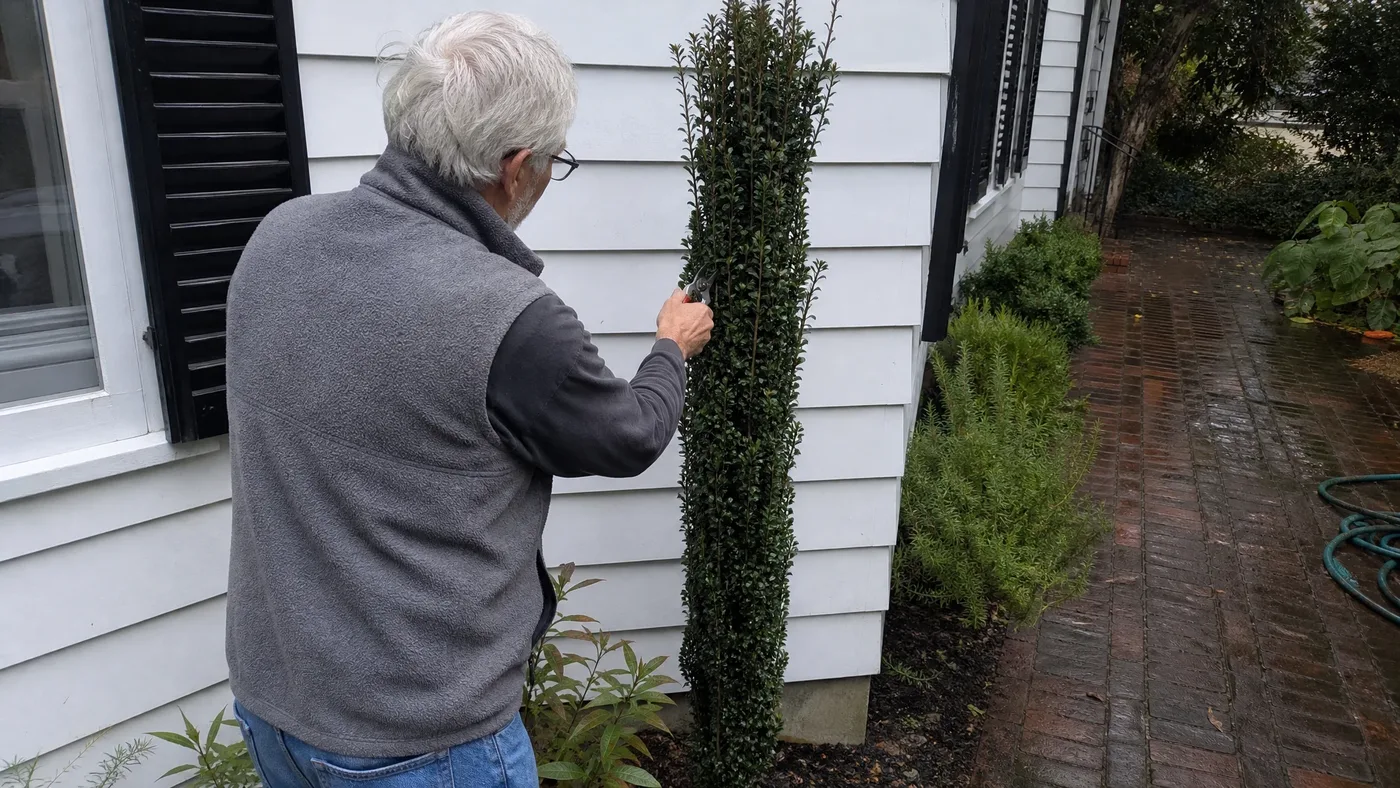
How to Propagate Sky Pencil Japanese Holly From Cuttings
Nothing leaves our shipping dock until the labels, the count and the packing list all agree. Do the same before you cut a single stem from your Sky Pencil: know which plant you are copying, how many cuttings you need, and where each tray will sit.
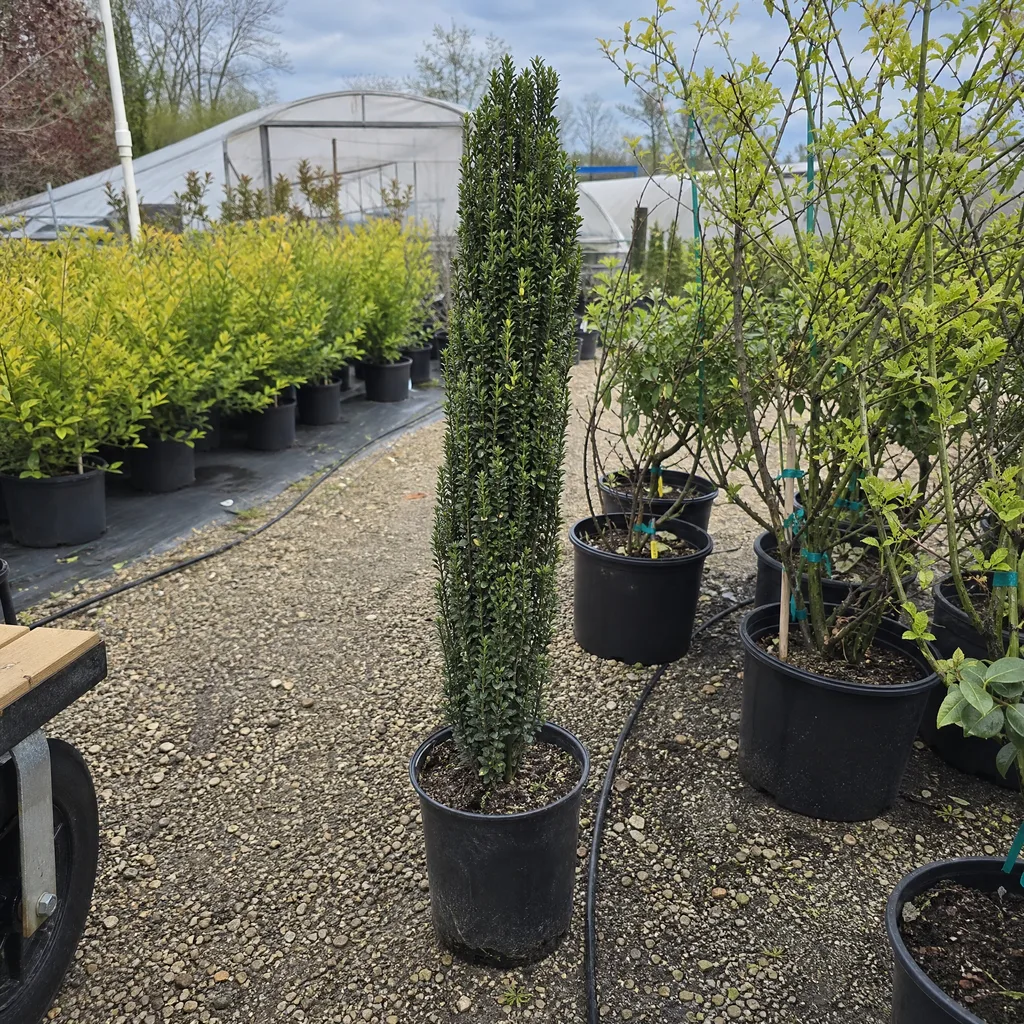
The problem most readers arrive with is simple. You have one good Sky Pencil and you want more of them, ideally without paying for each one. Seed will not get you there, because a seedling does not hold the narrow column. A cutting does.
Read on for the sequence we follow: choosing stems, cutting, trimming, hormone, the rooting mix, humidity, hardening off and potting up.
Choosing Parent Stems on Sky Pencil Japanese Holly
Walk around the plant before you reach for the pruners. On a healthy Sky Pencil you will find side shoots with a soft green tip and bark that has started to firm toward the base. That half-ripe stage is what you want. Pencil-thin new growth that bends like a noodle wilts on the bench, and old brown wood is slow to root.
Timing follows the growth flushes. The University of Georgia extension lists June to September as the window for semi-hardwood cuttings, taken once the wood firms after a flush. Pick a cool morning, when the stems are full of water.
Decide your count before you cut. Write down how many cuttings you want, add a few extra for losses, and pick the parent shoots to match. A plan on paper keeps you from stripping one side of the plant bare.
Take From the Sides, Never the Leader
Sky Pencil is a column with one dominant upright stem. Leave the leader alone. Take cuttings from side shoots, from the back of the plant, and from wherever a branch is crowding the column. Done this way, the parent loses nothing a good trim would not remove anyway, and our pruning guide covers how to keep that shape.
Why Cuttings and Not Seed
Sky Pencil is a clonal selection, and its narrow, upright hedge form belongs to that one clone. Seedlings drift back toward the wider, spreading habit of the species. Sky Pencil is also an all-female cultivar that needs a male nearby to set fruit, so seed from your plant is unlikely in the first place.
Check the Patent Before You Cut
Sky Pencil is a patented selection. The Georgia extension bulletin warns that propagating patented plants can be unlawful, even for personal use. Confirm the patent status of your plant with your local extension office before you start, and keep the paperwork with your records.
Cutting Semi-Hardwood Shoots From Sky Pencil Japanese Holly
The easiest way to ruin a batch is to carry loose stems around in a warm hand. Bring a clean bucket with an inch of water, a sealed plastic bag, and a label. Bag each group of cuttings as you cut it and tag it with the date and the parent plant.
Target a terminal piece about 4 inches long, which is the size the Georgia bulletin lists for Japanese holly. Cut just below a leaf node with sharp, clean pruners. Wipe the blades with rubbing alcohol between plants so you do not carry disease from one parent to the next.
Cut more than you need. Not every cutting roots, and we plan on losing some. Aim for a batch you can count and track, rather than a bucket of mixed stems.
Keep Them Moist on the Way to the Bench
Shade is the second rule after water. Put the bag in a cooler or a shaded spot, and get the cuttings to the bench within an hour or two. If you need to wait longer, mist the inside of the bag and keep it closed. Do not leave a bucket of cuttings in a hot car, and do not soak them overnight.
Trimming and Wounding Each Cutting
Pick up one cutting and look at the bottom half. Every leaf that would sit below the mix line has to go, because buried leaves rot and take the stem with them. Sky Pencil leaves are small and glossy, so stripping is quick work.
- Pull or snip the leaves from the lower half of the stem, leaving a tuft at the top.
- Make a fresh, clean cut at an angle just below a node.
- Scrape a thin strip of bark, about the width of a fingernail, from one side of the base.
- Drop the cutting into a tray of clean water until the whole batch is ready.
The wound exposes the layer under the bark where roots start, and it gives the hormone more surface to work on. Scrape lightly. You want to see green or pale tissue, not a gouge that goes into the center of the stem.
Check the tuft at the top. If the leaves are large for the cutting, shorten them by about half with scissors so the cutting loses less water while it has no roots to replace it.
Rooting Hormone for Sky Pencil Japanese Holly Cuttings
Think of the hormone as a measured dose, not a coating. A thick clump of powder on the stem does more harm than good. A dip helps a firm-wooded evergreen like this one, but too much can burn the base.
The Georgia bulletin gives a range of 1,000 to 3,000 ppm for semi-hardwood cuttings, with 5,000 ppm as the ceiling. For a slow-growing, firm-wooded evergreen like Sky Pencil, we reach for the middle of that range. Read the label on your product and pick the strength that falls inside it.
Dip, Tap, Stick
Pour a small amount of hormone into a separate dish, never into the original jar. Dip the wounded base about an inch, then tap the stem firmly on the rim to knock off the excess. Stick the cutting right away. Discard what is left in the dish at the end of the day so a damp, contaminated jar never costs you a batch.
If the stem seems dry, dampen the base before you dip so the powder sticks. Work through the tray in order and keep your labels beside you. One tag for every group is cheaper than guessing later.
Sticking Cuttings Into a Gritty Mix
Japanese holly is very intolerant of poorly drained soils and especially prone to root rot, and the rooting tray is where that shows first. A cutting sitting in wet, heavy mix rots from the base before it roots.
Use a mix that is sterile, fine-textured, weed-free and without fertilizer, which is what the Georgia bulletin calls for. A blend of coarse sand or perlite with peat or fine bark works well. Wet it thoroughly and let the excess drain before you fill the tray. It should feel damp like a wrung-out sponge, not soggy.
Hole Depth and Spacing
Poke a hole with a pencil first so the hormone does not rub off as you push the stem in. Set each cutting deep enough that the stripped part of the stem is buried and the cutting stands on its own. Firm the mix gently around it.
Leave enough room that the leaf tufts do not touch. Crowded leaves hold water and invite gray mold. Label the tray with the date, the parent plant and the hormone strength before you move it.
Humidity for Sky Pencil Japanese Holly While Roots Form
A cutting has no roots, but its leaves still lose water. Cover the tray with a clear plastic dome, a zip-top bag held up by stakes, or a glass cloche, as the Georgia bulletin suggests, and mist as needed to keep the air humid until roots form. Keep the cover from touching the leaves.
Put the tray in bright light, but not in direct afternoon sun. A closed cover in full sun turns into an oven in an hour. Open the cover for a few minutes each day to let fresh air in, and remove any leaf that yellows or drops before it can rot.
Plan on about 10 to 12 weeks, the time the Georgia bulletin lists for holly. Do not tug to check. Instead, look for the signs in the table below.
| What you see | What it usually means | What we do |
|---|---|---|
| Fresh green growth at the tip | Roots are probably forming | Open the cover for longer each day |
| Roots showing at the drainage holes | Rooting is well along | Start hardening off |
| Black, soft base | Rot from too much water | Remove the cutting and ease off misting |
| Leaves still green but no change | Still waiting | Leave it alone and keep the mix damp |
One of the most common questions we get is whether a cutting that stays green for weeks is working. Usually yes. Holly takes its time.
Hardening Off and Potting Up Rooted Plants
Rooted cuttings that go straight from a humid tray to open air often collapse in a day. Take the same care you would with a shipment moving between climates: step it down gradually.
Start by cracking the cover for a few hours, then leave it off for longer each day. After a week or two of this, move the tray to a shaded spot outdoors, then to brighter light. Keep the mix evenly damp throughout. If the leaves wilt, put the cover back on for a day and slow down.
Into the First Pots
Once a cutting has a good set of roots, lift it carefully with a fork or spoon and pot it into a container just large enough for the root ball. Use a well-drained, slightly acidic mix with some organic matter, similar to what we describe in our soil guide. Water it in and keep it in shade for the first few days.
Keep the pots where you can reach them easily, and check the moisture by lifting a pot or pressing a finger into the mix. A young Sky Pencil with a small root system dries out and drowns faster than a mature plant, so look at each pot every few days.
Hold off on fertilizer until the plant is growing in its pot. In cold zones, plan on protecting the pots through their first winter, as we describe in our winter care guide.
A Tray of Rooted Sky Pencil Japanese Holly
A finished batch looks plain. Each cutting is a small upright stem with a handful of glossy leaves, a mass of white roots at the base, and a label with the date still attached. It does not look like a column yet. The narrow form builds slowly, because Sky Pencil has a slow growth rate.
Expect it to spend more than one growing season in pots before it is ready for a garden spot. In time it reaches the shape the Arkansas extension service describes, 8 to 10 feet tall and only 12 to 18 inches across. Our size guide shows what to expect along the way.
Picture the rows at the end: labeled pots lined up, each with its date and parent, each ready for its next stage. Be patient through the first winter. A cutting that sits still in its first cold months is not failing, it is saving its energy for spring.
Sky Pencil Japanese Holly
Nursery-grown Sky Pencil Japanese Holly in sizes from 1-2 ft. #1 Container, shipped to your door.
From $80.55
Shop Now →Cuttings like these do best when the parent plants have lived well, so our stock plants live in full sun to partial shade, in well-drained, slightly acidic soil. Everything we ship comes out of our own rows, and we only send top-quality shrubs we would plant at home. When your rooted cuttings are settled and you want a Sky Pencil to stand beside them, our shop is the place to find one.