Winter Care for Sky Pencil Japanese Holly in Cold Climates
Customers ask us every fall whether Sky Pencil can stay out all winter without a coat. In most of its range, it can. The cold itself rarely kills this holly. What does the damage is wet snow and ice piling onto those narrow stems until the column splays open, plus winter wind and sun that turn the leaves bronze.
We'll walk you through the fall prep that matters most, from supplies to mulch and watering, then the snow and ice routine for December through February, container care, and the spring cleanup. Do it well and you have a straight, dark green column come April. Skip it and a plant that grows slowly may need years to stand up straight again.
How Sky Pencil Japanese Holly Handles Cold Winters
Sky Pencil is rated for zones 5a through 8b, and Oregon State lists it as hardy to zone (5) 6. Zone 6 is the safe floor, and a zone 5 yard needs a sheltered spot. Our hardiness zones guide covers the range in more detail. Within it, the cold is rarely the problem. The plant's shape is.
The species holly spreads 5 to 8 feet wide, so its branches share a snow load across a broad mound. Sky Pencil is only 1 to 3 feet wide, so a heavy load sits on a few upright stems and pushes them apart. That is why advice written for ordinary Japanese holly does not always fit this cultivar.
Common advice says to wrap every holly in burlap each November. What we tell customers is to skip it unless the site is truly exposed, and we explain why below.
Winter Bronzing Is Normal
In very cold, exposed sites, Sky Pencil Holly foliage often develops a bronze or purple tinge in winter. This is a natural response to cold stress and does not indicate disease or death. The foliage returns to dark green as temperatures warm in spring.
Bronzing is more pronounced in plants that receive full southern or southwestern sun exposure. If your plant shows significant bronzing and sits in one of these exposures, consider it a sign that a bit of afternoon shade or a windbreak would help in future winters. For this year, simply monitor the plant and wait for spring.
One of the most common questions we get in January is whether a bronze plant is dying. In nearly every case it isn't.
Fall Preparation: Supplies, Site, Mulch and Water
Almost everything that protects Sky Pencil happens before the first hard freeze. Gather your supplies first, then work through site, mulch and water.
Gather Your Supplies
Before November arrives, gather these materials:
- Mulch (2 to 3 inches deep): shredded bark, wood chips, or composted leaves
- Burlap or frost cloth (optional, for severe exposures): unbleached burlap or horticultural fleece for wrapping
- Garden twine or soft plant ties: to gently support or wrap the columnar form if needed
- Watering can or soaker hose: for fall and early spring irrigation
- Evergreen fertilizer or balanced feed: applied in early fall, optional but helpful
- Small stakes and ties (optional): for container specimens or young plants on windy sites
Choose or Improve the Site
Site selection makes the biggest difference. Sky Pencil Holly prefers full sun to part shade, but in cold climates, part shade actually helps reduce winter leaf bronzing and burn, especially if your plant faces prevailing winter winds or afternoon sun exposure on south-facing walls.
If your holly is already planted in an exposed, windy site or in full southern exposure, consider whether you can relocate it before winter (best done in early fall). If relocation is not practical, you will rely more heavily on protective measures in the steps below.
Check the drainage around the base. Sky Pencil does not tolerate waterlogged soil, and standing water around the roots in freeze-thaw cycles can cause root damage. If the soil drains poorly, amend it with compost or peat moss to improve aeration and drainage before mulching.
Mulch Before the Ground Freezes
Once temperatures begin to cool, around late October in zones 6 and 7 and early November in zone 8, apply 2 to 3 inches of mulch around the base of the plant. Spread it evenly in a circular band, starting about 4 inches away from the stem and extending to the drip line (the outer edge of the foliage).
Mulch serves three purposes in winter: it moderates soil temperature fluctuations, keeps roots consistently moist (but not waterlogged), and insulates the soil against deep frost. Do not pile mulch directly against the stem, as this can trap moisture and invite bark damage or disease.
If you use wood chips or shredded bark, choose untreated, arborist-grade material. Avoid dyed or treated mulches, which can leach chemicals over time.
Water Deeply Through Fall
A common mistake is assuming that dormant plants need no water in fall. In fact, consistent soil moisture in the weeks before the ground freezes helps the plant enter winter with full hydration in its tissues, which improves cold tolerance.
Water deeply once a week if rainfall is light (less than 1 inch per week). Check soil moisture by pressing your finger 2 inches into the mulch. The soil should feel moist but not soggy. In zones 6 and 7, this routine typically continues through November, and in zone 8 it may extend into early December.
Once the ground freezes and temperatures stay below 32°F for several weeks, stop supplemental watering. Winter precipitation and snowmelt will supply what the plant needs. Resume watering in early spring when temperatures rise and the soil begins to thaw.
Managing Snow, Ice and Wind from December to February
Winter care for Sky Pencil is mostly a matter of watching the forecast. Here is what we do after a storm, and when we reach for twine or burlap.
Brush Snow Off Early
Heavy snow and ice loads are the primary winter threat to Sky Pencil Holly. The plant's narrow columnar form can handle some snow weight, but accumulations over 6 to 8 inches on the branches can cause stems to bend outward or crack under the load.
After heavy snow or ice storms, gently brush or shake off accumulated snow from the branches, working from the bottom upward. Use your hand or a soft broom, and avoid metal tools or vigorous whipping, which can break brittle, frozen branches.
In our rows, the plants that lean are usually the ones that carried a wet snow for days instead of hours.
Tie Leaning Stems Loosely
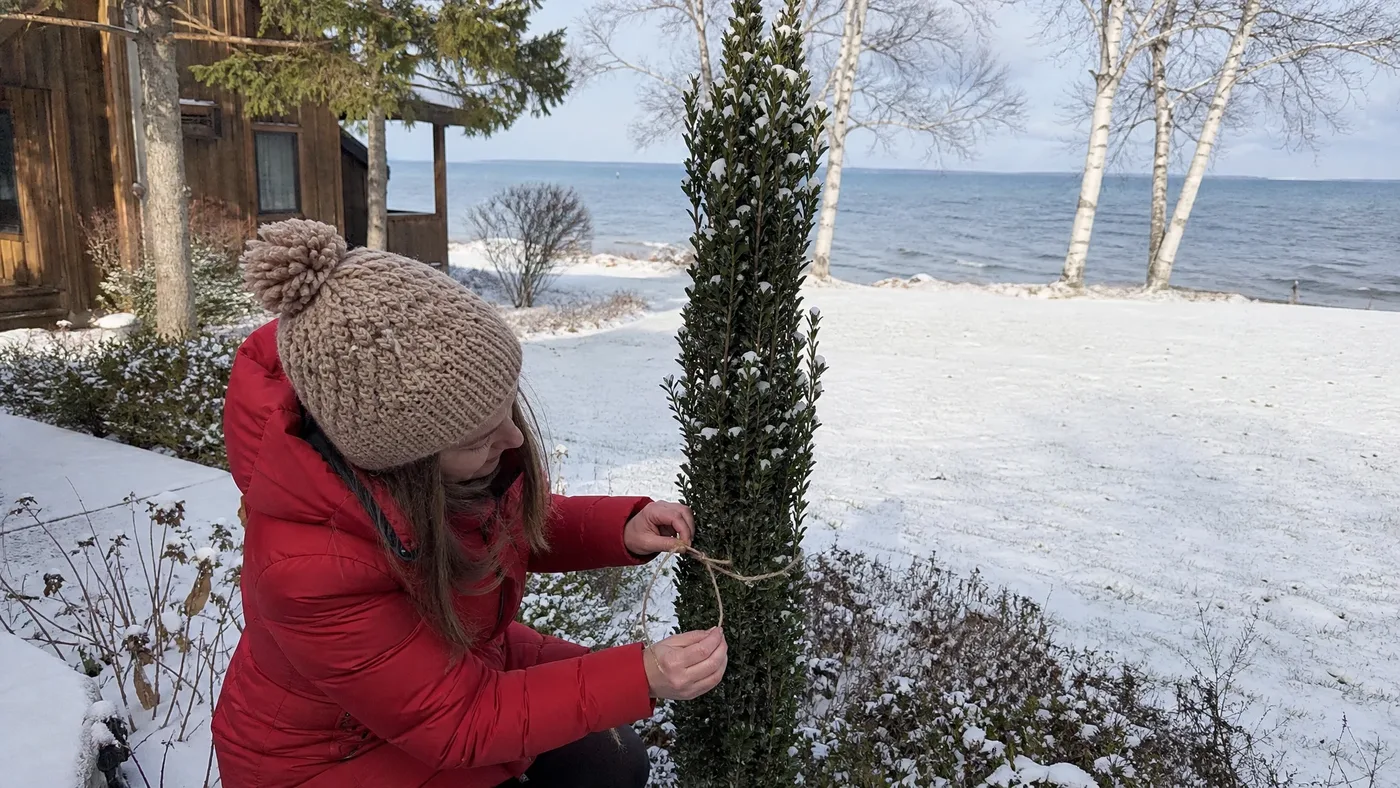
If your plant develops a pronounced lean or if branches splay open during winter, you can gently tie them inward with soft garden twine. Space the ties about 12 to 18 inches apart, from the base to the top of the column.
Do not cinch the twine tightly. It should guide the stems inward without cutting into bark. Remove these support ties in early spring (March or April) once new growth begins.
Burlap Only for the Worst Sites
We keep burlap for the hardest cases, such as northern zone 6 and some zone 5 sites with severe ice loads or blizzards. Wet burlap adds weight, and a wrapped plant is harder to check, so we don't wrap by default.
If you do wrap, drape unbleached burlap loosely around the whole plant and secure it at the top with soft twine, without compressing the stems. Remove it by early April so new spring growth can emerge without restriction.
Container Care in Winter
Sky Pencil Holly is well suited to growing in containers thanks to its narrow footprint, but container plants need extra attention in winter. The soil in pots freezes more rapidly and deeply than in-ground soil, and roots are more exposed to temperature extremes.
In zones 6 and 7, move container plants to a sheltered location against a south-facing wall or into an unheated garage or shed if temperatures regularly drop below 0°F. If moving is not practical, wrap the pot itself (not the plant) with bubble wrap or burlap to insulate the root zone. Water the pot once in November, then only if the soil is visibly dry. Frozen soil cannot absorb water anyway.
In zone 8, container plants can typically remain outdoors with mulching and basic protection, though moving them to a slightly sheltered site still helps.
For pot size and potting mix, see our guide to growing Sky Pencil in pots and containers.
Spring Cleanup and Recovery for Sky Pencil
Spring is when you find out what winter did. Start by taking off anything you added, then look the plant over.
As temperatures climb into the 50s°F range in late March or April, remove any protective wrapping (burlap) and support ties from winter. Do this before the spring growth flush begins, typically after the last expected frost in your zone.
Gently inspect the branches for any that were broken or heavily damaged by snow or ice. Sky Pencil requires minimal pruning, but if a branch is clearly split or hanging, it is safe to remove it with clean pruning shears. Make cuts close to a lateral branch or the main stem and avoid leaving stubs.
Do not prune aggressively in spring. The plant will naturally fill in any minor gaps in its columnar form. Heavy pruning, especially in late fall or early winter, encourages tender new growth that may not harden off in time for the next winter freeze.
Our guide to pruning Sky Pencil without ruining its shape covers the few cuts worth making.
Refresh the mulch layer if it has settled or compacted. The goal is to maintain 2 to 3 inches throughout the growing season. As the soil warms and the plant resumes active growth, monitor watering: keep the soil consistently moist but never waterlogged.
What Recovery Looks Like
With proper fall and winter care, most Sky Pencil Holly plants emerge from winter with minimal damage. You can expect the foliage to retain its dark green color or, in colder or more exposed sites, to show some bronze or purple tinting that fades by late spring.
Minor browning of outer foliage can occur on very exposed plants or after extremely cold snaps, but this does not necessarily mean the plant is dying. Remove any obviously dead branches in spring and give it time to fill back in along its column. A scratch test on a stem shows whether it is truly dead.
If a plant is severely damaged by ice breakage or root damage over the winter, recovery is slow. Sky Pencil is a slow-growing evergreen shrub, so reshaping after major damage can take several seasons. Patience and consistent care during the growing season support the strongest recovery.
Common Winter Mistakes With Sky Pencil
These are the slips we hear about most often, and every one of them is easy to avoid.
- Pruning in late fall: Avoid heavy pruning after September. Late-season cuts stimulate tender new growth that will not harden before winter freeze damage occurs. Wait until late spring (after the last frost) for any needed shaping.
- Overwatering in winter: Once the ground freezes, discontinue supplemental watering. Excess moisture can cause root rot or freeze damage to the root system.
- Piling mulch against the stem: Keep mulch 4 to 6 inches away from the trunk. Mulch piled against bark traps moisture and invites disease and rodent damage.
- Ignoring snow load: Do not assume the plant can handle unlimited snow weight. Brush off heavy accumulations promptly to prevent branch splaying or breakage.
- Planting in full southern exposure without windbreak: In zones 6 and 7, afternoon sun and winter wind cause the most significant leaf bronzing. If you must plant in such a site, plan for a simple windbreak (burlap fence, dense shrub shelter) to reduce winter stress.
We often see the pruning mistake in late fall, when a tidy-minded owner trims a leader that looks a little loose. Leave it until spring.
Quick Reference Checklist
Use this table as a seasonal checklist, with timing and the differences between zones 6–7 and zone 8.
| Task | Timing | Zone 6-7 | Zone 8 |
|---|---|---|---|
| Site assessment | Late September-October | Identify windbreaks or shaded spots, and avoid full southern exposure if possible | Prefer afternoon shade over full sun |
| Fall watering | October-November | Weekly, 1 inch if rain is light, and stop when ground freezes | Weekly through early December, and stop when ground freezes |
| Apply mulch | Late October-early November | 2-3 inches around base, keep 4-6 inches clear of stem | 2-3 inches around base, keep 4-6 inches clear of stem |
| Snow/ice management | December-February | Brush off accumulations over 6-8 inches, tie branches if splaying | Monitor after ice storms, tie if needed |
| Support ties or burlap | November-March | Optional for exposed plants and required in extreme sites | Rarely needed unless very exposed |
| Monitor bronzing | December-February | Normal in cold, windy sites and fades in spring | Rare and indicates too much sun exposure |
| Spring cleanup | Late March-April | Remove burlap, ties and dead branches after last frost | Remove ties or burlap and inspect for damage |
| Resume watering | April onward | Weekly if rain is light, keep soil consistently moist | Resume as soil warms |
Getting Sky Pencil Through Winter Standing Straight
The routine is short. Mulch and water deeply in fall, brush off heavy snow, tie leaning stems loosely, wrap only in the harshest sites, and save your pruning for spring. Bronze leaves are weather, not disease. For the year-round picture, see our Sky Pencil Japanese Holly care guide.
Sky Pencil Japanese Holly
Nursery-grown Sky Pencil Japanese Holly in sizes from 1-2 ft. #1 Container, shipped to your door.
From $80.55
Shop Now →We are a small business, and we are growers with our own farms who sell top-quality shrubs. Our growers watch Sky Pencil all year, from the first lean of a young leader after a wet snow to the tender new growth that follows a late spring frost.