12 Best Landscape Uses for Sky Pencil Japanese Holly
Most customers who come to our rows for Sky Pencil already know what they want it to do. They have a gap nothing else will fit. We see it wedged beside downspouts, framing doors and standing guard along fence lines. Plant it well and it holds a clean green line all year. Plant it badly and it leans, browns or crowds its neighbors.
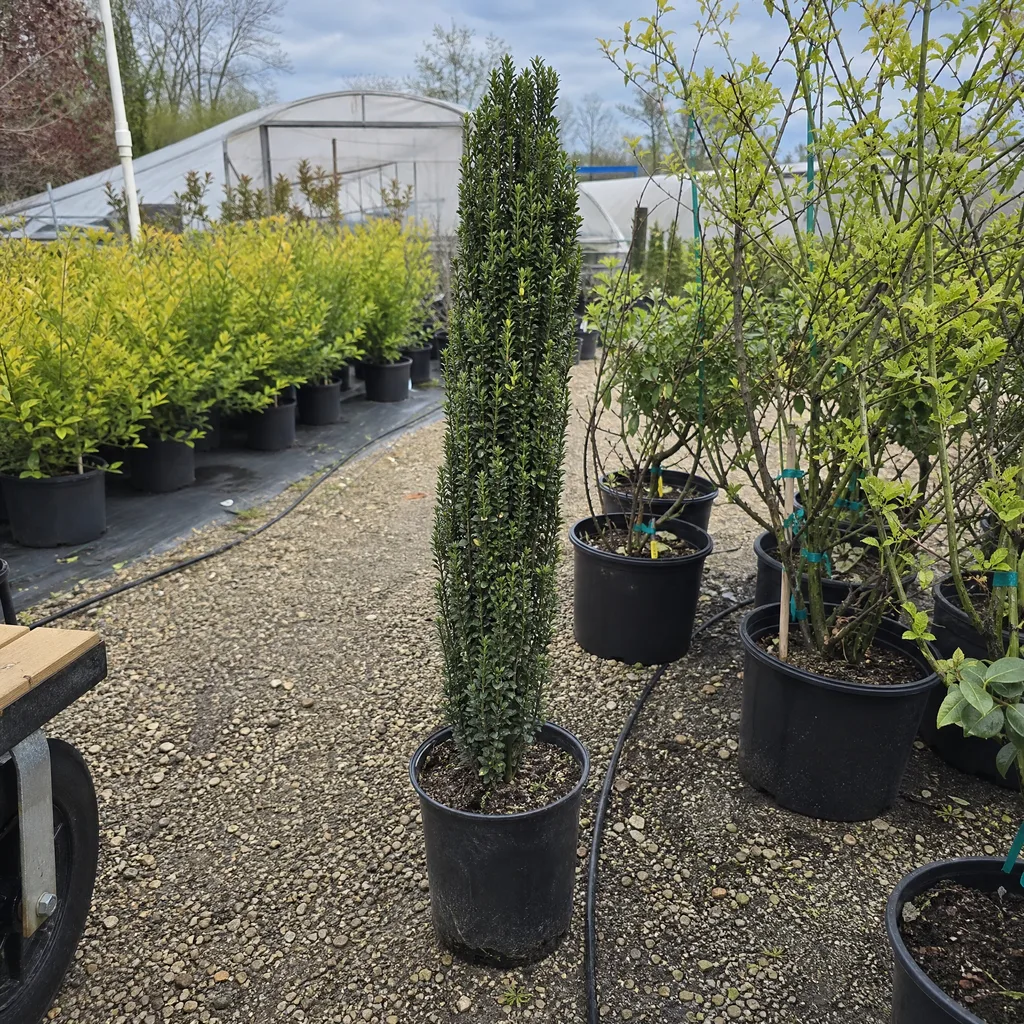
Below, you'll find out all about the best ways to use Sky Pencil Japanese Holly, including entryways, foundations, containers, screens, design styles and slopes, plus spacing, planting steps and the mistakes we see most often. It earns its spot because it stays narrow and grows slowly, so a planting you set today still looks right in year five.
Where Sky Pencil Japanese Holly Fits Best
Use Sky Pencil wherever you need height without width. The twelve uses below are narrow accents, doorway pairs, foundation corners, containers, hedges, utility screens, deer-pressure plantings, modern grids, Japanese gardens, cottage gardens, mixed borders and slopes.
Plan around the cultivar, not the species. Sky Pencil reaches 4 to 10 feet tall and 1 to 3 feet wide, while the species spreads 5 to 8 feet wide. Most plants we grow land in the 6 to 10 foot range. Count on it being hardy to zone 6, with zone 5 possible only in a sheltered spot.
Tight Spaces: Accents, Entryways, Foundations and Containers
These four uses share one move: put the narrowest shrub in the narrowest spot. Follow the steps under each one.
Narrow Vertical Accents
When your garden footprint is small but you want big visual impact, Sky Pencil Japanese Holly delivers height without sprawl. Its naturally columnar habit means it grows up, not out, occupying a footprint of just 1 to 3 feet wide while reaching 6 to 10 feet tall over time. This makes it perfect for tight side yards, narrow planting beds between buildings, or small urban gardens where every square inch counts.
Pair it with ferns or heuchera at its base to break up the vertical line and add textural contrast. A single Sky Pencil can anchor a small space without overwhelming it, drawing the eye upward. It has a slow growth rate, so you won't need to step in often, and the narrow form needs very little pruning.
Practical takeaway: Use Sky Pencil Japanese Holly wherever you need height but lack width. It's a space-efficient solution for tight modern landscapes.
Flank Entryways and Doorways
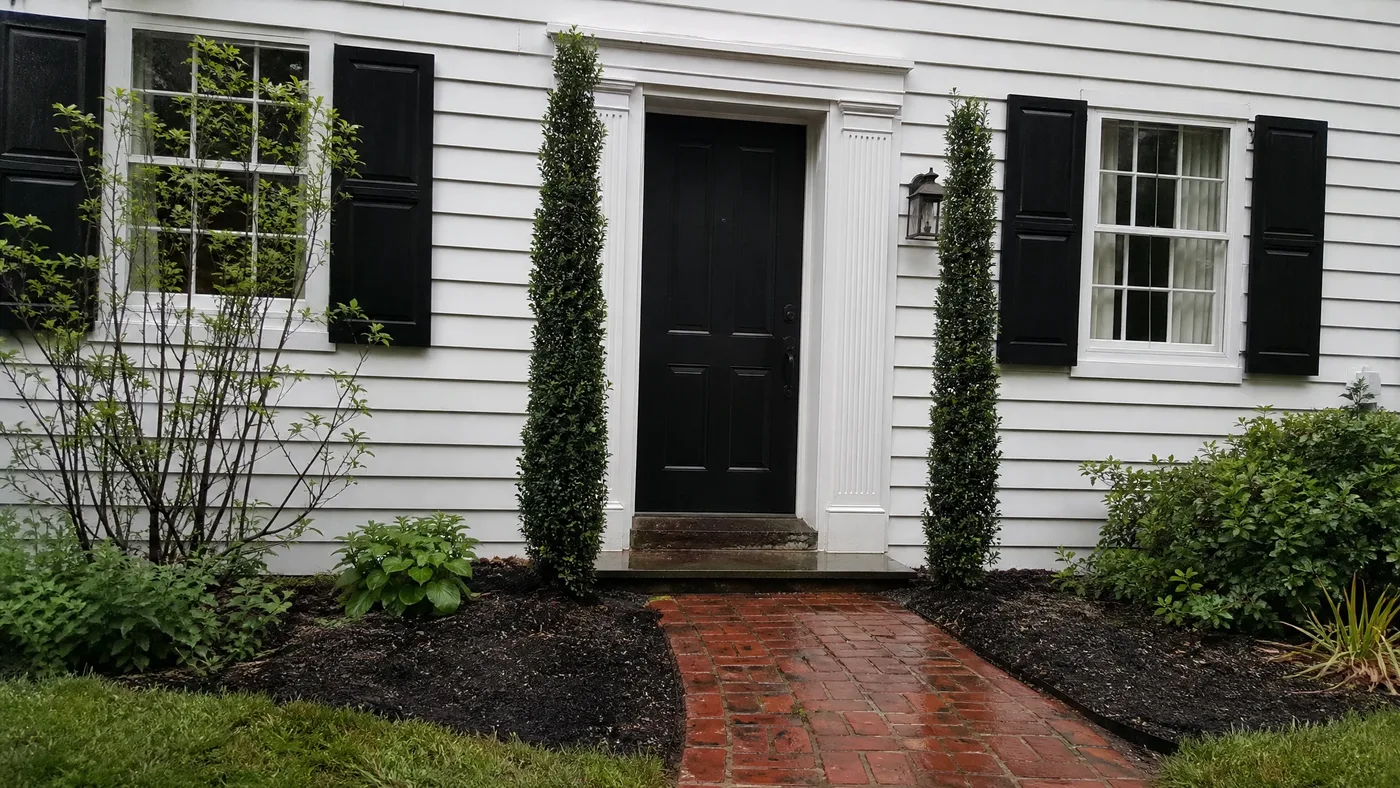
Few plants frame an entryway as cleanly as Sky Pencil Japanese Holly. Plant one on each side of a front door, gate, or path opening, and you'll instantly define and elevate the arrival experience. The formality of this narrow columnar silhouette signals intentional design and welcomes visitors with quiet confidence.
Space them 3 to 6 feet apart (one on each side) for a balanced, symmetrical look. Buy two plants of matching size and set them the same distance from the door so the pair stays even as they grow.
Sky Pencil takes full sun to part shade, so choose the spot by what your door gets. In cold, exposed sites the foliage can take on purple or bronze tinges. That color is harmless. The evergreen foliage keeps your entryway looking polished every season.
Practical takeaway: A pair of Sky Pencil hollies on either side of a doorway creates a formal, polished frame. They need minimal pruning and will look intentional with no fussing.
Add Height to Foundation Corners
Foundation plantings don't have to be all low mounding shrubs. Sky Pencil Japanese Holly adds needed vertical punctuation to the base of a house without blocking windows or creating a wall of green. Use it at the corners of a foundation, at either end of a bay window, or at building corners to tie the house to its landscape.
Pair it with lower-growing companions like hostas, azaleas, or boxwood to create a tiered, layered foundation planting that feels intentional and sophisticated. The narrow width of Sky Pencil means it won't eventually hide your siding or encroach on walkways the way a broader shrub might.
Give it moist but well-drained soil high in organic matter. Amend your foundation bed with compost at planting time and keep the soil evenly moist through the first growing season.
Practical takeaway: Use Sky Pencil at the corners or edges of foundation plantings to add height and structure without blocking windows or overrunning the base of your house.
Grow Sky Pencil in Containers
Sky Pencil Japanese Holly is well suited to containers thanks to its narrow footprint and slow growth. A single plant in a large pot (at least 5 gallons, ideally larger) makes an elegant focal point for a patio, porch, or entryway. Its columnar form reads like living sculpture in a container context, and the dark green foliage contrasts beautifully with stone, decking, or hardscape.
Containers dry out faster than beds, so water regularly through dry spells. Roots in a pot freeze harder than roots in the ground. In zone 6 and colder, wrap the pot in burlap or move it against the house foundation for the coldest months.
Fill the pot with well-draining potting mix high in organic matter and fertilize lightly in early spring with a balanced or acid-forming (holly-type) fertilizer. Keep it in full sun to part shade, since deep shade leads to legginess or thinning. Our guide to growing Sky Pencil in pots and containers covers pot sizes and winter care in more detail.
Practical takeaway: Sky Pencil in a large container is an elegant, low-maintenance focal point. Water regularly and protect the roots from winter freezes in zone 6.
Hedges, Screens and Deer-Pressure Planting
A row of Sky Pencil does the work of a hedge in a fraction of the width. Set the spacing and prune as shown below.
Build a Formal Hedge or Living Screen
Sky Pencil Japanese Holly is made for hedging in narrow spaces. Space plants 1 to 3 feet apart, depending on how quickly you want them to fill in and how dense you prefer the screen. Because the plant's columnar habit is already compact, you're working with an ideal starting form rather than trying to shear an unruly shrub into shape.
Plant a row along a property line, between your garden and a neighbor's, or to screen a utility area, a compost pile, or parked cars. This holly holds dark green foliage year-round, giving you evergreen privacy even when deciduous plants have dropped their leaves. For row spacing by goal, see our guide to Sky Pencil spacing for hedges and privacy screens.
Shear lightly after the spring flush, in late spring to early summer, to keep the row neat and encourage dense branching. Skip heavy pruning in late fall, which can trigger tender new growth vulnerable to winter damage. Our walkthrough on pruning Sky Pencil without ruining its shape shows the cuts.
Practical takeaway: A living screen of Sky Pencil requires less pruning than many hedge plants because it wants to grow narrow and upright. Space them 1 to 3 feet apart and light-shear once yearly after spring growth.
Screen Utility Areas and Eyesores
Does your yard have an air conditioning unit, propane tank, pool equipment, trash area, or parked cars that need screening? Sky Pencil Japanese Holly grows narrow and tall, perfect for concealing these necessary but visually unwelcome features without requiring a sprawling screen of broader shrubs.
Plant a row 2 to 3 feet apart, depending on your timeline and budget. You can also combine Sky Pencil with other evergreens or deciduous shrubs for a mixed-texture screen that blocks the view year-round while adding interest. Minimal pruning means the screen looks natural and low-maintenance.
Practical takeaway: A row of Sky Pencil Japanese Holly screens eyesores efficiently without requiring broad spacing or heavy pruning.
Use It in Deer Country With Realistic Expectations
One of the most common questions we get is whether Sky Pencil is deer-proof. It isn't. NC State rates it mildly resistant to deer damage, so hungry deer in high-pressure areas will still sample it.
Plant it in a row or mix it with other deer-resistant shrubs like boxwood, and don't count on it alone to protect softer plants behind it. Keep the soil evenly moist and well drained so the plants stay vigorous. A vigorous plant recovers from browsing faster than a stressed one.
Design Styles: Modern, Japanese and Cottage
Spacing and companions change with the look you want. Match the pattern below to your garden.
Modern and Contemporary Gardens
The architectural form of Sky Pencil Japanese Holly fits naturally into modern landscape design. Its clean lines, narrow profile, and year-round structure appeal to designers and homeowners working in contemporary, minimalist, or Asian-inspired aesthetics. Plant it as a standalone accent or in a grid pattern for a more structured, deliberate look.
Pair it with hardscape elements (stone, gravel, concrete, or decking) and low-growing perennials or groundcovers to create visual contrast. The plant's formality works especially well in gardens where geometry, repetition, and restraint are the goal. In modern foundation plantings, use multiples of the same plant (three, five, or seven) spaced evenly for visual impact without clutter.
Practical takeaway: Sky Pencil's clean columnar form is a natural fit for contemporary gardens. Repeat it in odd numbers for structured, intentional designs.
Japanese and Zen Gardens
Sky Pencil Japanese Holly is, quite literally, a Japanese cultivar selected for its columnar form. It fits seamlessly into Japanese gardens, zen courtyards, and tea gardens where structure, restraint, and borrowed landscape are valued. The dark green foliage and narrow profile echo the aesthetic of traditional Japanese landscape art.
Use it as a focal point in a courtyard, as part of a living screen separating spaces, or planted in a gravel or moss bed with stone accents. The slow growth rate means your carefully planned composition will stay balanced and intentional for years.
Pair it with ferns, hostas, heucheras, and hydrangeas, which create the layered, textural effect that Japanese design embraces.
Practical takeaway: Sky Pencil fits naturally into Japanese-inspired gardens. Combine it with hostas, ferns, and shade-loving perennials to create a cohesive, intentional design.
Cottage Gardens
Cottage gardens thrive on layering, texture, and purposeful abundance. Sky Pencil Japanese Holly provides a structured vertical anchor in cottage plantings without the formality of a manicured hedge. It plays well with perennials, roses, and looser companion plantings, grounding a cottage design with year-round structure.
Surround it with hydrangeas, azaleas, ferns, and herbaceous perennials for a cottage effect that feels romantic but intentional. The evergreen foliage of Sky Pencil keeps the garden from collapsing into bare branches in winter.
Shear lightly after spring growth to keep it neat. Avoid the stiff, formal pruning that would undermine the cottage aesthetic.
Practical takeaway: In cottage gardens, Sky Pencil provides year-round structure without formal fussing. Layer it with softer plants for a balanced, romantic look.
Mixed Borders and Slopes
Sky Pencil also works as a vertical backbone in layered plantings and on uneven ground. Here is how to set it up in each.
Mixed Borders and Layered Plantings
Sky Pencil Japanese Holly adds vertical punctuation to mixed borders where you'd otherwise have low mounding shrubs and perennials. Plant it behind shorter companions to create layering and depth. The narrow profile means it won't dominate the border or cast heavy shade on nearby plantings, making it a considerate addition to mixed schemes.
Pair it with azaleas, boxwood, hydrangeas, and shade-tolerant perennials like hostas and ferns. Space the companions 2 to 3 feet away from the Sky Pencil to give all plants room to develop without competing for moisture and nutrients. We find the best companion plants for its narrow form are the ones that stay low.
The moist, well-drained soil high in organic matter that Sky Pencil prefers also suits these companions, so your border can share the same care and thrive together.
Practical takeaway: Use Sky Pencil as a vertical backbone in mixed borders. Its narrow form lets companion plants at its base receive sun and air circulation.
Sloped or Tiered Planting
On sloped terrain, Sky Pencil Japanese Holly adds visual interest without the bulk or spread of broader shrubs. Plant it at varying heights along a slope to create a rhythmic pattern that echoes the land's contours. The narrow form also means less erosion around the plant base than a wider shrub would cause.
Use it in a tiered planting scheme where taller plants at the back grade down to lower companions at the front. The slow growth rate means your composition will remain balanced as the plants mature. In sloped areas, ensure good drainage and consistent (not waterlogged) moisture, especially during establishment.
Practical takeaway: Sky Pencil's narrow form works beautifully on slopes. Plant it at varying heights for visual rhythm without risk of erosion around broad root systems.
Plant Sky Pencil Right and Avoid the Common Mistakes
Every use above depends on the same few planting habits. Get these right and the narrow shape holds for years.
Planting and Care Steps
Follow these five steps for any of the uses in this guide.
- Choose the site. Pick full sun or part shade, since sources list both with no preference. Avoid deep shade, which thins the plant.
- Prepare the soil. Dig in compost and keep drainage good. Sky Pencil grows in acid or neutral soil.
- Water through the first season. Keep moisture consistent while the roots establish.
- Feed lightly. Use a balanced or acid-forming (holly-type) fertilizer in early spring. Once established, Sky Pencil needs little supplemental feeding.
- Prune only as needed. Use light shearing or shaping in late spring to early summer, after the spring flush. Avoid heavy pruning in late fall.
Read the full Sky Pencil Japanese Holly care guide for detailed planting, watering, and seasonal care instructions.
Mistakes We See Most
These three problems show up in customer photos again and again.
Mistake 1: Planting it in hot, humid country. NC State lists Sky Pencil for zones 5a through 8b and warns of heat and humidity trouble in zones 8 and 9. Many catalogs list it for zone 9 anyway. We don't recommend it there, and in warm zone 8 we suggest a spot with some relief from the hottest sun.
Mistake 2: Shearing it like a boxwood. We often see customers clip the top flat and cut the sides hard. That ruins the pencil outline. Trim lightly after the spring flush and let the columnar form do the work.
Mistake 3: Ignoring pests. Spider mites and nematodes are occasional pests. Check for dull, stippled foliage and plants that fade for no clear reason, and act early.
Quick Reference: Sky Pencil Japanese Holly Landscape Uses
This table sums up spacing, light and companion plants for each use.
| Use | Spacing / Key Detail | Sun / Soil | Companion Plants |
|---|---|---|---|
| Vertical accent | Single plant or wider spacing | Full sun to part shade | Ferns, heuchera, ground covers |
| Formal hedge | 1-3 ft apart | Full sun to part shade | N/A (hedge only) |
| Entryway flanking | One per side, 3-6 ft total | Full sun to part shade | Boxwood, smaller foundation plants |
| Foundation planting | Corners or intervals, 3-6 ft apart | Full sun to part shade | Hosta, azalea, boxwood |
| Container | 5+ gallon pot (larger preferred) | Full sun to part shade | N/A (solo specimen) |
| Screening eyesores | 2-3 ft apart in row | Full sun to part shade | Mixed evergreens optional |
| Modern design | Multiples in odd numbers (3, 5, 7) | Full sun to part shade | Hardscape, low perennials |
| Japanese garden | Focal point or screening row | Full sun to part shade | Fern, hosta, heuchera, hydrangea |
| Mixed border | 2-3 ft from companions | Full sun to part shade | Azalea, boxwood, hydrangea |
| Deer-pressure screening | 2-3 ft apart in row | Full sun to part shade | Boxwood, other deer-resistant plants |
| Sloped/tiered planting | Varying heights along slope | Full sun to part shade | Lower companions downslope |
| Cottage garden | Single or paired, 3-6 ft | Full sun to part shade | Hydrangea, azalea, fern, perennials |
Sky Pencil Still Looks Right in Year Five
Pick the use that matches your space, set the spacing for that use, and plant in full sun to part shade in well-drained soil. Skip the hot, humid climates, shear lightly and expect deer to sample it now and then. Do that and Sky Pencil keeps a tight green line with very little work.
Sky Pencil Japanese Holly
Nursery-grown Sky Pencil Japanese Holly in sizes from 1-2 ft. #1 Container, shipped to your door.
From $80.55
Shop Now →We are growers with our own farms, and we grow and sell top-quality shrubs we would plant ourselves. Every Sky Pencil we ship is potted firm in fresh mix, packed upright so the narrow stems stay straight, and sent so it arrives ready to plant.