Companion Plants for Sky Pencil Japanese Holly
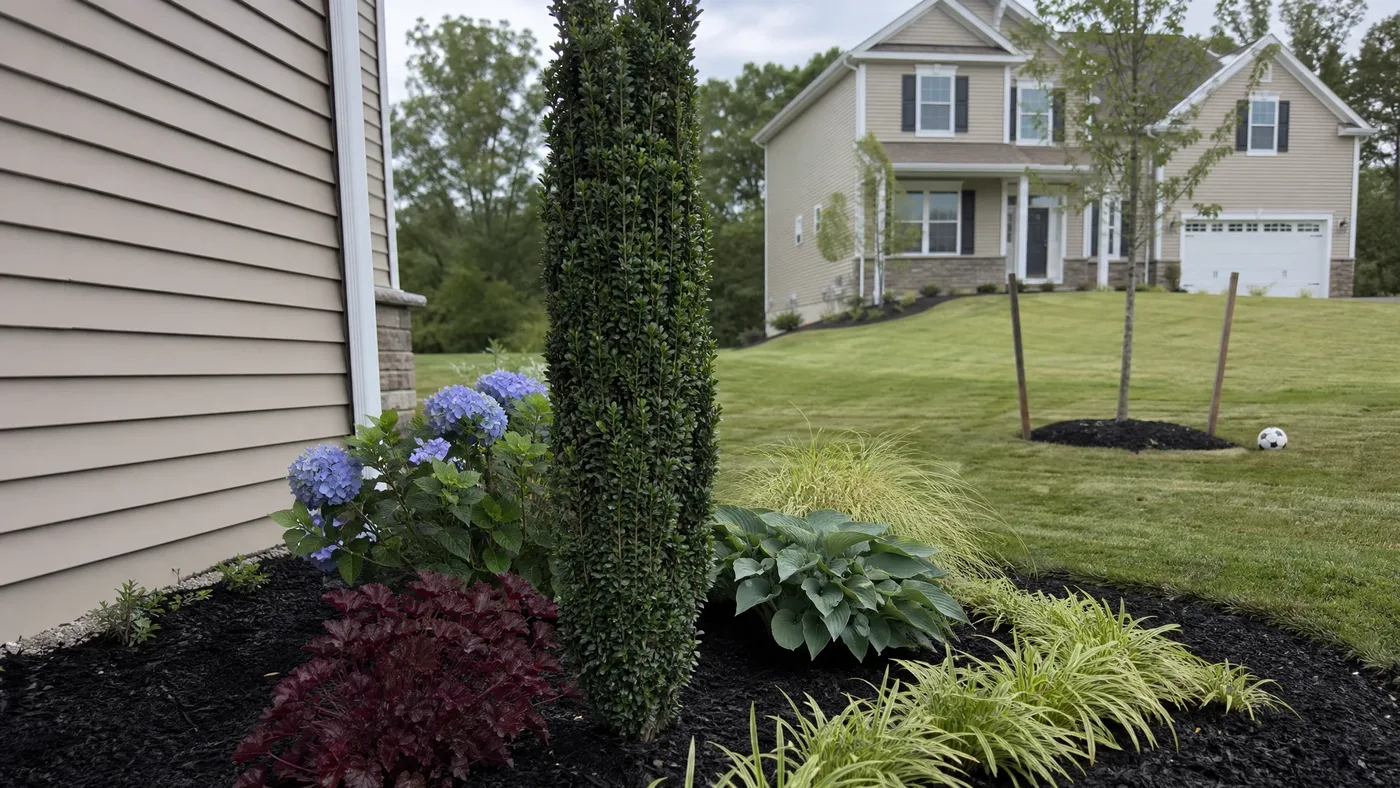
A lone Sky Pencil looks like a green fence post someone forgot to finish. What stands next to it decides whether the planting looks designed or just stuck in the ground, and the wrong neighbors do more than look bad. A thirsty tree drains the bed, a shade-caster dims the foliage, and a running groundcover creeps into the roots, so the holly ends up thin, browned and leaning for light.
This article talks about companion plants for a narrow evergreen column and answers the questions customers ask us most. Read on to learn what hydrangeas, heuchera, hosta, liriope and grasses each do beside the holly, which soil, water and light conditions every partner must share, and which plants to keep well away.
Why Sky Pencil Japanese Holly Needs Company
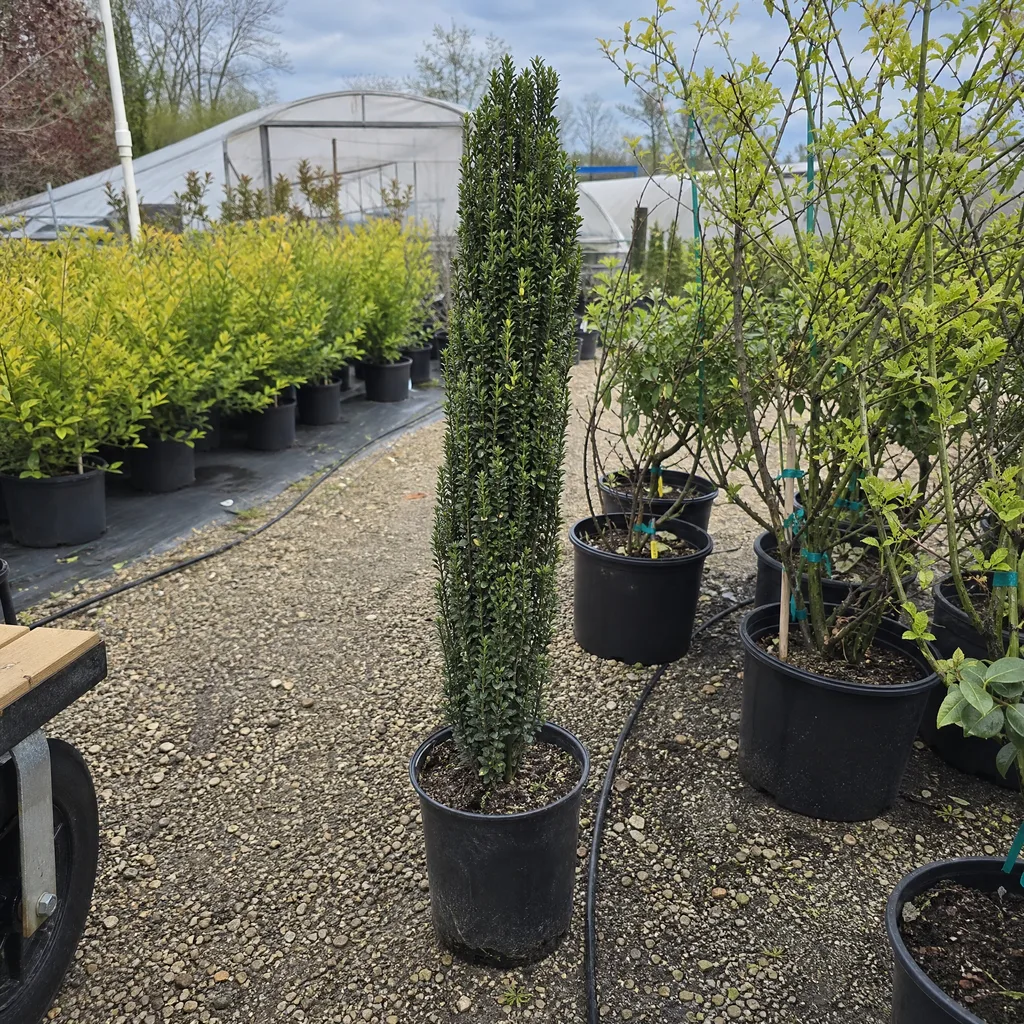
Sky Pencil is a vertical accent, and it does that one job well. The branches grow tight and upright, making a column 1 to 3 feet wide that climbs anywhere from 4 to 10 feet tall. Arkansas Extension describes it as growing like an exclamation mark only 12 to 18 inches across. That is a lot of height on a very small footprint.
The parent species is a different animal. It spreads 5 to 8 feet and looks more like a boxwood, so it fills its own space. This cultivar never does. It keeps its shape without pruning, grows slowly, and leaves everything around it as open ground. In the first few seasons that open ground is most of what you see, and bare mulch with one stick in it does not read as a landscape.
We sort companions by the job they do beside the column: bulk at mid height, cover at the base, a clean edge, and soft movement against all that stiffness. The next four sections take one job each, and then we cover the conditions they all have to share.
Pick one plant per job, then stop. A bed that fills every role with three different plants turns into a rummage sale, and the slow-growing holly is the one that gets buried.
Hydrangea Adds Bulk Where the Column Is Thin
Hydrangea is the easy answer to a thin column, because it is everything the holly is not. Bigleaf hydrangea grows into a rounded, multi-stemmed shrub, generally 3 to 6 feet tall and wide, with big leaves and large flower heads. Set that beside a plant 1 to 3 feet wide and the eye gets a mass and a spire in one view. The holly's own flowers are small, greenish white and of no ornamental value, so the hydrangea supplies the color.
Here is the catch. Hydrangeas are not drought tolerant. They want soil that is consistently moist, well drained and rich in compost, and bigleaf types may wilt in full sun even when the soil is wet. That suits Sky Pencil better than you might expect, because the holly does poorly in drought too. Both want steady water. Neither wants to stand in it.
One of the most common questions we get is whether the two can share a bed. Our answer is yes, as long as the bed drains. Put the hydrangea where it gets morning sun and shade from the afternoon heat, which the holly handles without complaint. Our watering schedule for Sky Pencil shows how to keep moisture even without overdoing it.
Placement matters more than the pairing itself. Stagger the two shrubs instead of lining them up, and give the hydrangea room to reach its full width so its stems never lean on the column. Hydrangeas drop their leaves in winter, which is fine. The holly carries the bed's structure while the hydrangea is bare, and the pair swap duties through the year.
Heuchera and Hosta Cover the Ground at Its Feet
The ground at the holly's base is the part owners forget, and it is the part that makes a planting look finished. The holly's leaves are small, so foliage plants with larger shapes and stronger color give the eye something to compare them with. Both of these plants like the lighter shade that falls near a column.
Heuchera for Color and Fine Texture
Heuchera puts its color in the leaf instead of the flower. Burgundy, amber, lime and silvery foliage are all common, and against dark green holly the contrast is immediate. A mound of ruffled leaves also reads well against a vertical line.
Plant it in front of the column in part shade with sharp drainage. Heuchera crowns sit low and dislike wet feet, so it shares the drainage the holly demands. Check how your chosen type winters in your zone before you count on it for cold-season color.
Hosta for Big Leaves
Hosta goes the other direction, with broad leaves that make the holly's small foliage look finer by comparison. It does best in the shade on the north or east side of the column and wants steady moisture, so it is the partner to pick when the bed gets watered regularly. It dies back in winter and leaves bare ground, so pair it with something evergreen.
Two cautions. Deer often browse hostas, and Sky Pencil is only mildly resistant to deer, so a hosta patch may bring them to the bed. And keep both plants a little back from the stem so the base of the holly stays visible. A column that vanishes into foliage at its feet loses the point of being a column.
Liriope as a Tidy Edge Along the Base
Liriope is the plant we reach for when someone wants a clean line along the base of a screen. It is evergreen, so the edge stays green after everything else has gone dormant, and Liriope muscari grows in clumps that spread about 12 to 18 inches wide. It will grow in deep shade or full sun, sand or clay, so it tolerates whatever spot the holly has. Buy the clumping type, because creeping forms send runners into places you did not plant them.
The usual mistake is planting it hard against the stems. A thick clump packed around a slim trunk holds moisture at the base and competes for water in the first dry season. Here is how we set it:
- Plant the holly first, at its final spot, and let the soil settle around it before you place anything else.
- Mark an edging line along the front of the bed and keep the first crowns at least half a clump width from the stem, which means about 6 to 9 inches.
- Set each crown at the depth it sat in its pot, spaced 12 to 18 inches apart so neighboring clumps just meet at full width.
- Water the new clumps well, then mulch the bare soil, keeping mulch off the crowns and off the holly's stem.
For a row of several hollies, run one continuous liriope line along the front instead of a separate clump at each trunk. A continuous band ties the columns together, and it makes the gaps between them look planned.
Ornamental Grasses Bring Movement to Sky Pencil Japanese Holly
Grasses are the easiest way to add motion to a plant that cannot move. Sky Pencil is not wind-proof and needs protection from wind, but a tall, narrow column like this stays stiff compared with a grass beside it, which sways, rustles and changes with the season. That soft, arching leaf against the stiff column is the contrast designers mean when they talk about texture. Light decides which grass you can use, so we split them by shade.
Grasses That Take Part Shade
Part shade is a common spot for the holly and a hard one for grasses, because most ornamental grasses want sun. Japanese forest grass and the sedges are the ones we point to. Both make soft, arching mounds under a lighter canopy, and both cope with the steady moisture a hydrangea bed holds.
Grasses for Sunnier Beds
Where the holly gets 6 or more hours of direct sun, you can use fountain grasses or feather reed grass. Place them to the side and slightly behind the column, not in front, so they do not hide it or comb its foliage in the wind. A sun-loving grass in half shade does not sway gracefully. It lies down.
Whatever you choose, keep it a full clump width away so leaf tips do not rub the holly. Stay modest on size too. The holly grows slowly, and a tall grass can outgrow it in a single season, which is not the proportion you are after.
Soil, Water and Light Your Pairings Must Share
Every partner has to live with the conditions the holly sets, and these decide success more than any design idea. Get them wrong and no color combination will save the bed. Start with light, then soil, then water.
NC State lists Sky Pencil for full sun, meaning 6 or more hours of direct light, down to partial shade, and Arkansas Extension says it is best in full sun or light to moderate shade. Georgia Extension adds that Japanese hollies persist better in partial shade in zone 7. Common advice treats holly as a shade plant you can tuck anywhere. We disagree. Deep shade under a canopy is not what these sources recommend, and our sun requirements guide goes further.
Soil comes next. The holly wants well-drained, slightly acidic soil with a good base of organic matter, and it does poorly in alkaline soil. Clemson says Japanese hollies are very intolerant of poorly drained soils and especially prone to root rot. Read our soil and amendment guide before you buy a single companion.
Water is the last shared condition. The holly takes steady moisture and does not do well in drought, so partners that need daily soaking or almost none will fight it. This table shows how the usual companions line up.
| Companion | Light | Moisture | What to watch |
|---|---|---|---|
| Bigleaf hydrangea | Morning sun, afternoon shade | Consistently moist, well drained | Wilts in hot full sun |
| Hosta | Shade to part shade | Steady moisture | Disappears in winter |
| Heuchera | Part shade | Even moisture, sharp drainage | Crowns dislike wet feet |
| Liriope | Deep shade to full sun | Adapts to sand or clay | Buy the clumping type |
| Ornamental grasses | Match the species to your light | Match to the bed's watering | Sun-lovers flop in shade |
Plants That Crowd or Starve Sky Pencil Japanese Holly
Some plants look harmless in the pot and cause trouble within a couple of seasons. Sky Pencil has a small footprint and grows slowly, so it cannot out-compete anything determined, and the job of keeping bad neighbors out falls to you. These are the ones we warn against.
- Running spreaders. Running bamboo, English ivy and periwinkle move through the root zone or up the column, and a plant 12 to 18 inches across loses that fight.
- Thirsty trees. Maples, willows and other big surface-rooters pull water through the dry months, and the slow-growing holly shows it first as browning and thin foliage.
- Dense shade-casters. Tall evergreen shrubs and low-branching trees on the sunny side turn the holly's light into deep shade, which none of our sources recommend.
- Leaners. Floppy perennials and big grasses planted tight lean on the stems, trap moisture and hide the form you bought the plant for.
The fix is room. Our spacing guide for hedges and screens covers how far apart to set the hollies themselves. In our rows, we keep every plant a clear gap from its neighbor, and a slow holly with open ground on all sides holds up better than one wedged into a crowd.
A Sky Pencil Japanese Holly Planting That Holds Together
Here is the plan in one pass. Put the holly where it gets sun to light shade and drained, slightly acidic soil. Stagger a bigleaf hydrangea beside it with afternoon shade, run heuchera and hosta in the shaded ground in front, edge the base with clumping liriope kept back from the stem, and finish one end with a grass chosen for your light. One plant per job, each with its own room. Our landscape uses guide shows where that plan fits on your property.
In a few years the bed should look like this: the holly standing straight, the hydrangea filled out beside it, the liriope a clean green line, everything settled and nothing arguing. Nothing leans, nothing is thirsty, and nobody has to explain the fence post. If your site does not match the plan, tell us what you have and we will help sort out a planting.
Sky Pencil Japanese Holly
Nursery-grown Sky Pencil Japanese Holly in sizes from 1-2 ft. #1 Container, shipped to your door.
From $80.55
Shop Now →In our fields, Sky Pencil sits in sun to light shade, in loose, well-drained soil that runs slightly acidic and is rich in organic matter, with a windbreak close by. Every plant we sell is raised in those same fields, top-quality shrubs, grasses and perennials alike. Browse our shop and choose the companions that will sit well beside your holly.