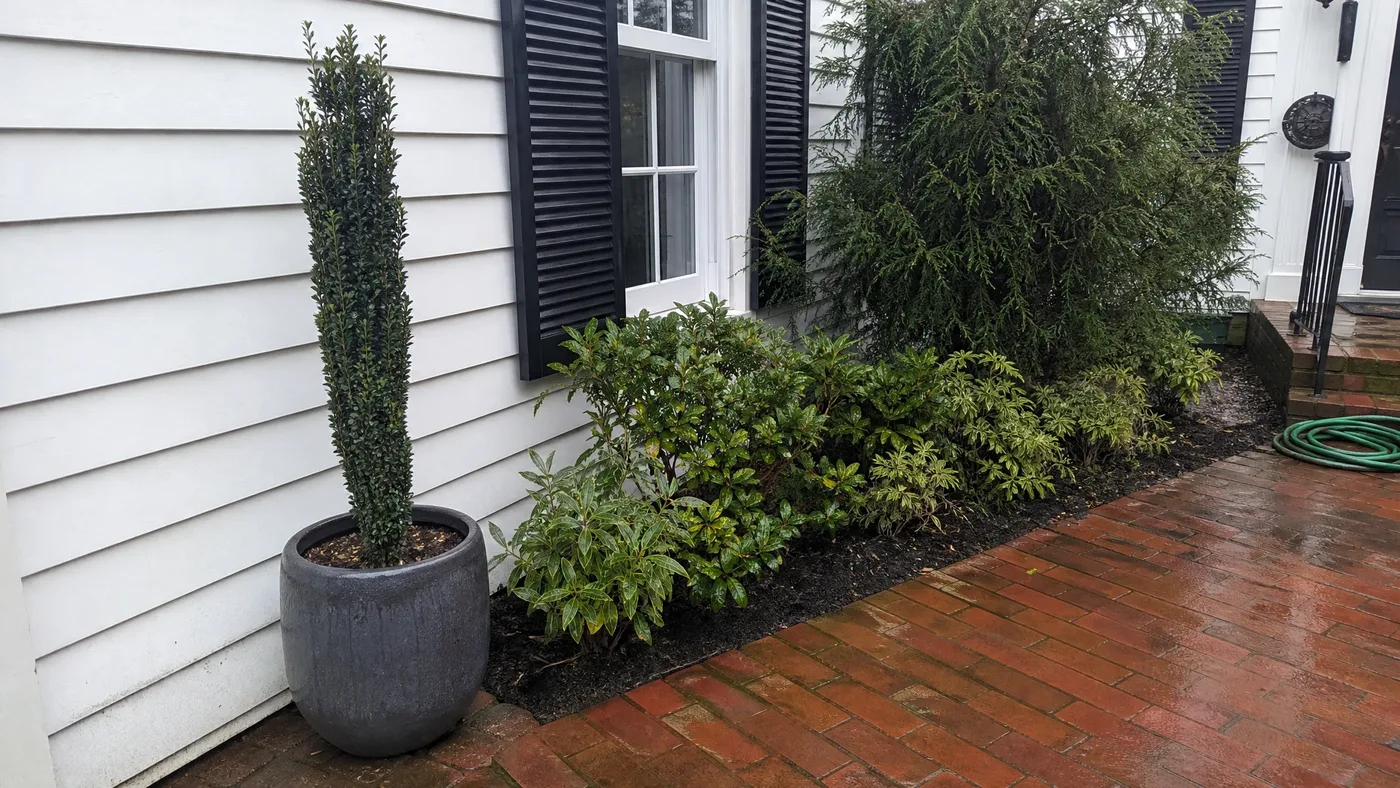
Growing Sky Pencil Japanese Holly in Pots and Containers
Yes, Sky Pencil grows very well in a pot, and it is one of the few columnar evergreens we happily recommend for containers. It stays slim and grows slowly, so a single plant can anchor a patio, entry or balcony for years without taking over the space.
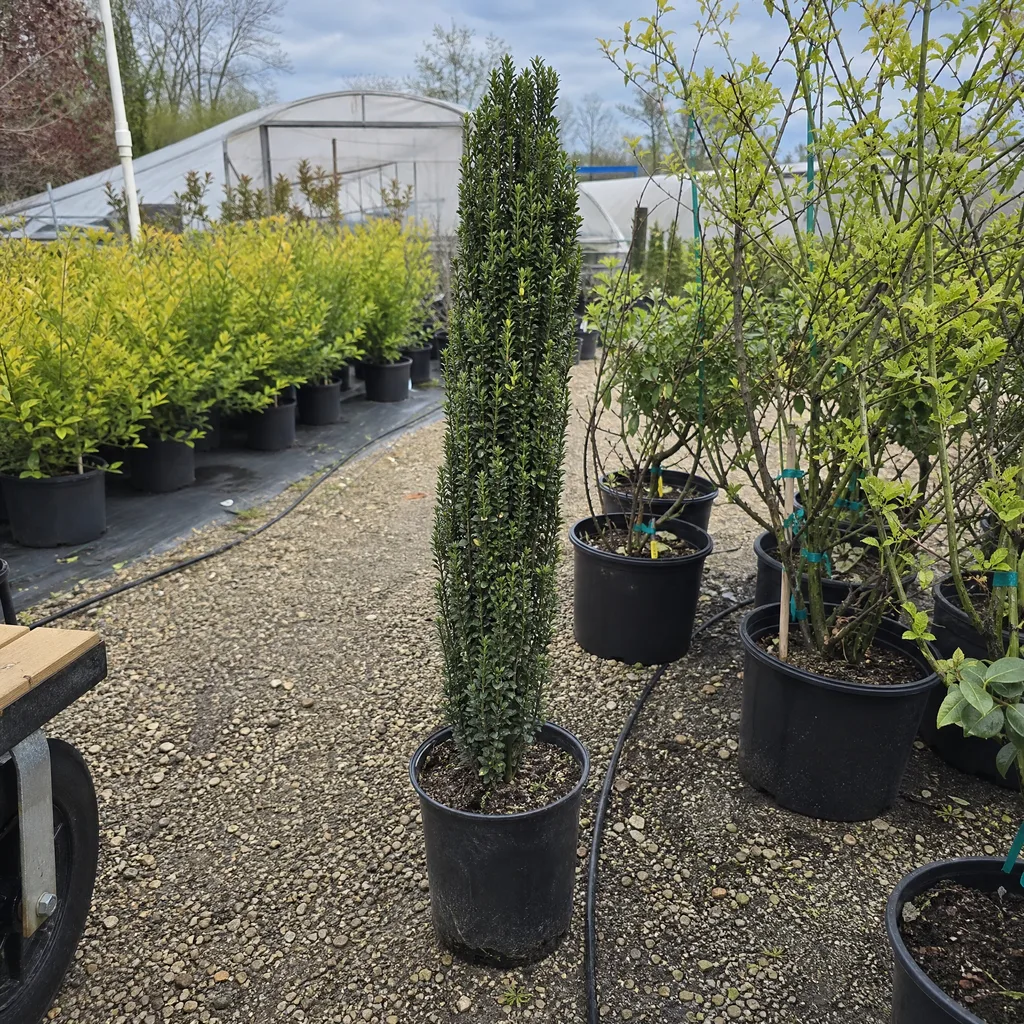
This guide covers everything you need to know about growing Sky Pencil in a container, from choosing the pot and mixing the soil to watering through summer and protecting the roots in winter. Get those right and you keep a tight, deep-green column. Get them wrong and you end up with yellow leaves, dry brown tips or roots killed by a hard freeze.
We grow it in pots ourselves, and the steps below are what we tell customers.
Who Sky Pencil Suits in a Container
Choose Sky Pencil for a pot if you want a slim vertical accent and can water it regularly. It suits entryways, narrow patios and balcony corners. It stays 1 to 3 feet wide, while the species spreads 5 to 8 feet, so it never outgrows a pot the way its parent would. Its roots stay compact too, so a pot rarely cramps them. Skip it if you want a pot you can ignore for a week in July.
The narrow columnar habit of Sky Pencil holly is naturally suited to pot life. Where a boxwood or spreading shrub would feel cramped, this plant's vertical growth pattern actually benefits from the defined footprint a container provides. You gain mobility, too: a potted Sky Pencil can be moved seasonally to optimize light exposure, repositioned after a harsh winter to assess damage, or relocated to a sheltered spot during peak cold spells.
The main trade-off is consistency. Potted plants dry out faster than in-ground specimens and require regular watering year-round, including during dormant months in colder zones. In return, you control the soil pH precisely, preventing the chlorosis (yellowing leaves caused by poor iron availability) that can develop in alkaline garden soil. For container gardeners in zones 6 to 8, the ability to provide winter root protection is also invaluable.
Potting Sky Pencil Step by Step
Follow these steps in order. Most container failures we see start with the pot or the mix, not the plant.
Gather Your Supplies
Collect everything before you start, so you are not hunting for perlite with a root ball in your hands.
- A container 12 to 18 inches in diameter for a nursery-grown plant (usually sold in 1 to 3-gallon sizes). Larger specimens may need 18 to 24 inches.
- Potting soil or container mix high in organic matter (avoid pure topsoil, which compacts in pots)
- Coarse sand or perlite to improve drainage if your mix is dense
- Sulfur or aluminum sulfate (if planting in a region with alkaline water)
- Balanced or acid-forming fertilizer (azalea or holly-type formulations work well)
- A saucer or tray to catch excess water (optional but helpful in early establishment)
- Winter mulch or burlap for zone 6 winters (optional, but recommended in exposed locations)
Step 1: Choose the Right Pot and Drainage
Select a container with at least one drainage hole. A 12 to 18-inch diameter pot works well for most nursery stock. If you're starting with a smaller quart-sized plant, you can begin in a 10-inch pot and graduate to a larger one after the first year. Clay, plastic, or composite pots all work, though clay warms and dries faster (beneficial in cool climates, but requiring more frequent watering in hot summers).
Choose a heavy pot, because a tall, narrow column in a light pot tips over in the first strong wind. Do not pot a small plant into a huge container to avoid repotting later. We hear that advice often, and we don't follow it. A big pot of soil stays wet around a small root ball, and Sky Pencil roots rot in wet soil. Step up one size at a time.
Step 2: Prepare the Soil Mix
Fill the bottom third of your pot with potting soil that's high in organic matter. If your potting mix feels very dense or compacted, work in a handful of coarse sand or perlite per gallon of soil to ensure water doesn't sit at the roots.
Sky Pencil holly prefers acid or neutral soil, roughly 5.0 to 6.5 pH. If you live in a region with alkaline tap water, incorporate sulfur into the mix at planting (follow package directions, typically 1 to 2 teaspoons per pot), or plan to acidify the soil in spring annually.
Step 3: Position the Plant
Remove the plant from its nursery pot and set it in the center of your container. The top of the root ball should sit 1 to 2 inches below the rim of the pot, leaving room for watering. Backfill with your prepared soil mix, pressing gently to eliminate air pockets but avoiding excessive compaction. Water immediately and thoroughly until water drains from the bottom hole.
Step 4: Water and Settle
After planting, water again the next day to settle the soil further and confirm drainage is working. The root ball should feel moist but not waterlogged. If water pools on the surface, the drainage hole may be blocked or your soil is too dense. Fix that before moving forward.
Year-Round Container Care for Sky Pencil
Sky Pencil asks for steady water and light feeding, and winter is the season that sets a pot apart from a ground planting. Here is the year in order.
Spring and Early Summer
As new growth emerges, water consistently. Aim for moist (not soggy) soil at all times. A container in full sun to part shade will dry faster than one in shade, so check daily during dry spells.
In early spring, apply a light feeding with a balanced or acid-forming fertilizer to support the growth flush. Light pruning or shaping can be done after the spring flush, in late spring to early summer, if the plant is becoming leggy or unevenly branched. Avoid heavy pruning in late fall, which encourages tender growth vulnerable to winter damage.
Summer
This is the critical watering season for potted hollies, especially in hot, humid climates. Sky Pencil takes sun to part shade, but a pot bakes its roots faster than ground does. In a hot summer, move the container to a spot with afternoon shade. Leaf bronzing is a cosmetic issue caused by cold or sun stress.
Check soil moisture daily, and expect a heavy summer rain to be your only "off" day. Do not let the container dry out completely, even briefly, as this shocks the roots. Do not waterlog the pot either. If water stands more than a few hours after a storm, drill or widen the drainage hole. Our simple watering schedule goes into more detail.
Fall
Reduce watering slightly as temperatures cool, but maintain consistent moisture through fall. Do not apply fertilizer in late fall or early winter, as this stimulates tender new growth vulnerable to frost damage.
Winter (Zones 6-7 and Colder Areas)
This is where container growing diverges most from in-ground planting. Sky Pencil is listed as hardy in zones 5a through 8b, but that rating assumes roots in the ground. Roots in a pot are exposed to deeper freezes.
In zones 6 and 7, move the pot to a sheltered location (east or south-facing wall, against the house, or in an unheated garage) to buffer winter wind and extreme temperature swings. Apply 2 to 3 inches of mulch over the soil surface to insulate the roots, or wrap the entire pot in burlap.
Watering is still necessary, but only when soil is dry to the touch and temperatures are above freezing. Even in dormancy, Sky Pencil holly's foliage retains moisture and benefits from occasional light watering in a warm spell. Our winter care guide covers colder sites in more detail.
In zone 8, winter protection is less critical, but moving the pot to a sheltered spot during a harsh freeze is still prudent if an extended cold snap is forecast.
What to Expect by Year Five
In our rows, a potted Sky Pencil looks much the same in year five as in year one, only taller. As a slow-growing evergreen shrub, it keeps its columnar shape with little more than light shaping. One of the most common questions we get is whether it will outgrow the pot. Move it up one size when roots circle the inside of the pot or water runs straight through.
For more comprehensive care guidance once your plant is established, see our full Sky Pencil Japanese Holly care guide. If you're curious about planting techniques for in-ground specimens, we also have a detailed primer on how to plant Sky Pencil Japanese Holly the right way.
Common Mistakes With Potted Sky Pencil
Most of the failed pots we hear about come down to the five mistakes below. Each one is easy to avoid if you plan for it from the start.
Poor Drainage or Wrong Soil
Using garden soil, topsoil, or a mix without organic matter is the fastest way to kill a potted holly. These compact into a dense paste that suffocates roots and promotes root rot. Always use a potting mix or container soil, and amend it with perlite or sand if it's overly heavy.
Inconsistent Watering
Potted plants cannot tolerate the boom-bust watering cycles that happen when you forget a pot and then drench it. Establish a routine: check soil moisture daily, and water when the top inch feels dry. During peak summer or in windy locations, this may mean watering every other day or even daily.
Neglecting Winter Root Protection
The most common reason container hollies fail in zones 6 and 7 is winter root damage. If you live in a cold zone, plan to protect your pot from the start. Do not assume the plant will survive a winter outdoors in an exposed location, even if it's rated hardy to your zone.
Overfeeding
A light annual feeding in early spring is enough. Overfeeding promotes tender growth that bronze-tips in cold snaps and invites pest pressure. More is not better with hollies.
Allowing Alkaline Soil Buildup
If your tap water is alkaline, calcium and other minerals accumulate in the pot's soil over time, raising pH and triggering chlorosis. Either acidify at planting with sulfur, or plan an annual spring acidification. If chlorosis appears mid-growing season, it's a sign your soil is too alkaline and needs remediation.
Quick Reference: Container Care Checklist
Use this table as a year-round checklist for your potted Sky Pencil.
| Task | Timing | Notes |
|---|---|---|
| Plant or repot | Spring or fall | Avoid peak summer heat. Use potting soil, not garden soil. |
| Water | Daily to every other day in spring and summer, weekly in fall and winter as needed | Soil should be moist but not waterlogged. Check daily in summer. |
| Fertilize | Early spring only | Use balanced or acid-forming (holly/azalea) formula. Light application only. |
| Light prune or shape | Late spring to early summer (after spring flush) | Avoid heavy pruning in late fall. Minimal pruning needed due to naturally narrow form. |
| Mulch soil surface | Fall (before winter in zones 6-7) | 2 to 3 inches of mulch insulates roots in cold climates. |
| Move pot to shelter (zones 6-7) | Late fall, before hard freeze | East or south-facing wall, against house, or unheated garage. |
| Test and adjust soil pH | Spring (annually in alkaline-water regions) | Target 5.0 to 6.5. Use sulfur if soil is too alkaline. |
| Assess growth and vigor | Annual review | Expect slow, steady height gain. Chlorosis or sparse foliage signals a care issue. |
Keeping Sky Pencil Slim and Healthy in Its Pot
A potted Sky Pencil needs a heavy pot with drainage, a loose acidic mix, steady water and one light feeding in early spring. Add root protection in zones 6 and 7, and you get a tight green column that holds its shape for years.
Sky Pencil Japanese Holly
Nursery-grown Sky Pencil Japanese Holly in sizes from 1-2 ft. #1 Container, shipped to your door.
From $80.55
Shop Now →Before a plant leaves us, our growers check each Sky Pencil for even green foliage from base to tip and a root system that fills its pot without circling. We are a small business with our own farms, and we grow and sell top-quality shrubs we would happily plant in our own containers.