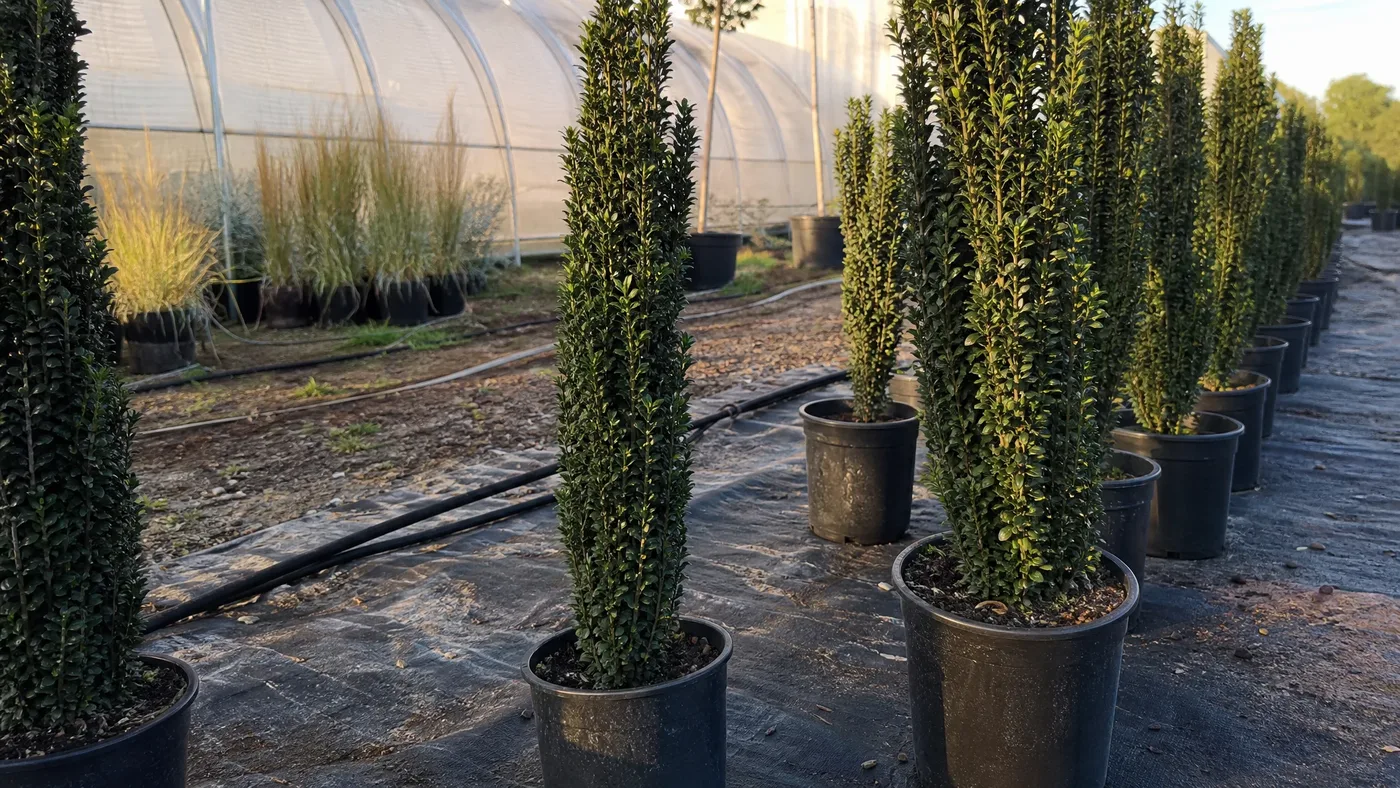
Buying Sky Pencil Japanese Holly: Container Sizes and What to Look For
One question we get constantly is which container size of Sky Pencil to buy. Our answer is a #1 (one gallon) for most plantings, because it shows its columnar shape and still settles in fast. Go to a #3 only when you need matching heights on day one, such as a formal hedge or a pair flanking a doorway.
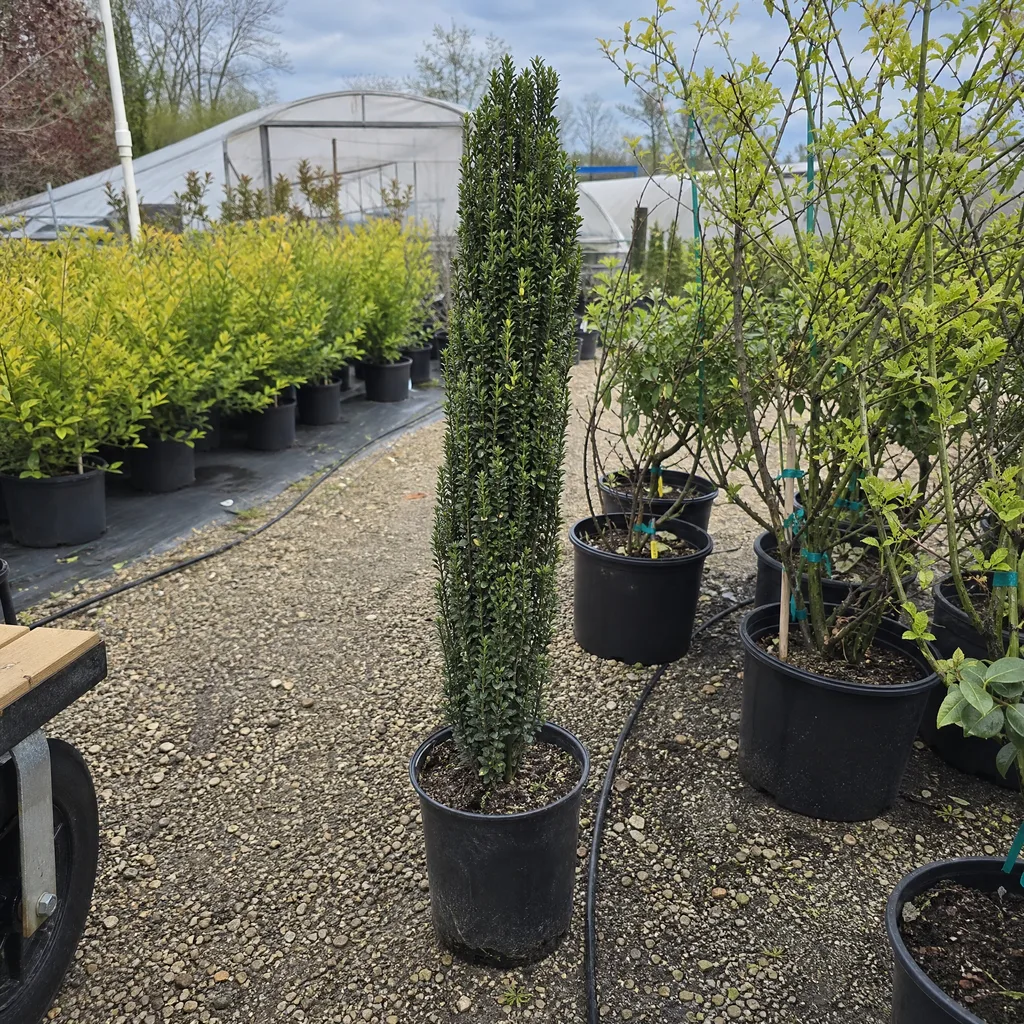
Size is only half the decision. Sky Pencil is a slow, narrow shrub, so a weak plant at purchase stays weak for years, and a hollow or leaning one never fills in. We'll walk you through the container sizes and what each one costs you in waiting time, then how to judge foliage, stems and roots, where to buy, when to buy, and the red flags that make us walk away from a plant.
Done right, you get a tight evergreen exclamation mark that looks the same in January as it does in July.
Which Sky Pencil Size Should You Buy?
Here is the short answer, based on what we ship and what customers tell us a few years later.
Our pick is the #1. A one-gallon Sky Pencil is large enough to show its form, small enough to be affordable, and young enough to settle in without much fuss. It is what we recommend for most hedges and screens, and for most single accents too.
For formal hedges, entryway accents, or landscape focal points where size and maturity matter immediately, buy #3 Sky Pencil hollies. You're paying more, but the plant is already 3 to 4 feet tall, fully branched, and dense. In a formal garden, the consistency and immediate impact often justify the cost.
Why we don't push quarts for savings. A common tip is to buy the smallest pot and let the plant catch up. We don't follow that for Sky Pencil. It is a slow-growing evergreen shrub, so the money you save on a quart gets paid back in seasons of waiting. Quarts only make sense for a long run where you can watch the rows fill in over time.
Sky Pencil Holly Container Sizes Explained
Nurseries typically stock Sky Pencil hollies in one of three container sizes, and the size you choose affects both the price and how quickly your plant fills in.
Quart containers
A quart (often written as "Qt") is the smallest nursery container size for a rooted plant. These are usually 3 to 4 inches in diameter and hold about one quart of soil. A quart Sky Pencil holly is typically 12 to 18 inches tall and may show only a single main stem or limited branching.
Quart plants are the cheapest way in, but they ask for patience. The plant will reach 6 to 8 feet or more over time, and a quart takes years to get anywhere near landscape size. We often see customers underestimate that wait. Pick a quart only if you can tend young plants and don't need the screen soon.
#1 containers (one gallon)
A #1 pot (one gallon) is the middle ground. These plants are typically 18 to 30 inches tall, with visible branching and a more defined columnar shape. The plant is established enough that it will establish faster in the ground than a quart, yet still affordable.
#1 Sky Pencil hollies give you a good balance. The plant looks substantial in the landscape right away (8 to 12 inches taller than a quart) but is still young enough to grow naturally into its mature form. In our rows, this is the size that sells out first.
#3 containers (three gallons)
A #3 pot (three gallons) is the premium option. These plants are typically 3 to 4 feet tall, fully branched, and dense. A sky pencil holly #3 pot shows clear columnar form from purchase and makes an immediate landscape statement.
#3 pots are ideal if you're installing a formal hedge and want all plants to be the same size, or if you want near-mature form right away. You'll pay substantially more per plant, but the waiting period is cut from years to one or two growing seasons. For accent plants at doorways or in high-visibility spots, a #3 often justifies the cost.
If you plan to grow Sky Pencil in a planter instead, our guide to growing Sky Pencil in pots and containers covers pot size and potting mix.
What to Look For in a Healthy Sky Pencil Holly
A healthy Sky Pencil Holly plant shows dense, glossy dark green foliage from top to bottom. The leaves are small (0.5 to 1 inch), oval, and packed tightly along the stem. This dense growth is a nursery-grower secret: it tells you the plant spent time in good light and was pruned to branch well from the base.
Foliage density and color
Open it up and check the interior of the canopy. Light should filter through, but you should see foliage at multiple layers, not a hollow stem with leaves only on the outside. Thin or sparse growth in the middle means the plant spent too long in low light at the nursery or was stressed by drought.
The foliage color should be deep green and uniform. In nurseries in hot climates or exposed locations, you may see leaves with a purple or bronze tinge in winter. This is normal in cold or windy sites and typically reverses when growth resumes in spring, but avoid plants that look scorched or bleached, which can signal sunburn or salt damage.
Stem structure and straightness
Run your eye up the central stem. Sky Pencil hollies are bred for their upright, columnar habit, so a plant that leans noticeably or has multiple competing leaders is either damaged, poorly staked, or genetically off. A slight lean may straighten once the plant settles into your garden, but a plant that's visibly splaying or leaning hard is not worth the gamble.
In our rows, the plants that lean are almost always ones that sat too close together in the bed, so we space pots out to keep every stem growing straight up.
Check the stem for obvious damage: broken branches, splits, gouges from transport, or cracks in the bark. Minor scrapes heal, but a tree with a long split or crushed section will fight to recover.
Root zone and container drainage
Tip the container and look at the drainage holes. Roots poking through are normal for a nursery plant. Standing water, algae, or wet, foul-smelling soil are red flags. Sky Pencil hollies need consistent moisture but cannot tolerate waterlogged conditions, and a plant that spent weeks in soggy soil will struggle once planted.
Lift the pot. It should feel heavy for its size, indicating good soil moisture without being waterlogged. A pot that's very light means the plant has been under-watered or is already stressed.
Key Features to Compare When Shopping
Once you have a size in mind, these four checks help you tell two plants of the same size apart.
Branching pattern
More branches near the base mean a bushier, fuller plant at maturity. A plant with just two or three stems branching from a central leader will take longer to fill in and may never achieve the dense columnar form you're after. Look for plants with at least four to six distinct branches or stems visible from the base.
Height-to-width ratio
A quality Sky Pencil is narrow, with its width no more than about one-third of its height. The cultivar tops out at 1 to 3 feet wide at full maturity, so at any stage it should already look pencil thin. Ordinary Japanese holly spreads 5 to 8 feet wide, so a wide, bushy plant labeled Sky Pencil may not be true to type. If you are planning a row, our guide to spacing Sky Pencil for hedges and privacy screens shows how narrow plants change the layout.
Soil condition
Sky Pencil hollies perform best in moist, well-drained soil high in organic matter. Ideally, the soil in the pot should be loamy or sandy loam, not pure sand or clay. When you water the pot in the nursery, the water should drain promptly but the soil should retain moisture. Soil that's hard-packed, compacted, or depleted of organics may have hosted the plant for too long.
Growth vigor and damage history
A plant with new growth at the shoot tips is actively growing and vigorous. Faded or absent growth suggests stress. Broken branches are common in shipping, but multiple broken tips across the canopy, a large pruning wound, or obvious dieback suggest the plant was mishandled or neglected.
Where to Buy Sky Pencil Japanese Holly
Where you buy changes how much you can check before the plant is yours.
Local nurseries
Visit in person if you can. You can inspect foliage density, check drainage, and assess branching before purchase. Local nurseries can also advise on regional hardiness and growing conditions. Ask the staff how long the plant has been in the pot and whether they've pinched or pruned it recently to encourage branching.
Online retailers and mail-order nurseries
Reputable online retailers ship nursery-grown Sky Pencil hollies. Check reviews and confirm the seller guarantees shipping protection and offers a health guarantee on arrival. Request detailed photos before purchase if available, and inspect the plant immediately upon arrival for shipping damage. Most sellers offer a window to report damage, so document any issues with photos.
Specialty holly nurseries
Nurseries that specialize in Ilex cultivars often stock multiple container sizes and may carry related cultivars like Ilex crenata 'Compacta' or 'Helleri' for comparison. They can discuss hardiness, size expectations, and growth rates with authority.
For care guidance once you bring your plant home, see our complete Sky Pencil Japanese Holly care guide.
Timing: When to Buy and Plant
Spring and fall are the optimal planting seasons, and they're also when nurseries stock the widest selection of Sky Pencil hollies. Spring is the busy season for nurseries, so selection is fullest but prices may reflect demand. Fall offers good plant availability and cooler weather for establishment, making it an underrated buying window.
Avoid peak summer heat (June through August in most regions). Nurseries continue to stock plants then, but a freshly potted plant under heat stress is harder to assess and more vulnerable to transplant shock.
Winter is typically off-season for nursery stock, though some retailers carry container-grown plants year-round. If you buy in winter, verify the plant was grown in containers (not field-dug and potted recently), and plan for extra root-protection care in cold climates.
Red Flags to Avoid
Walk away from a Sky Pencil holly if you see any of these:
- Weak or sparse interior foliage: A hollow plant will never fill in. Density comes from light and good care early on, and you cannot force it later.
- Obvious lean or splaying: A plant leaning hard to one side or spreading wide will be a chore to stake and train. A slight bend may correct itself, but obvious splaying is a structural problem.
- Wet soil or standing water in the pot: Waterlogging causes root rot in hollies. If the soil smells sour or feels spongy, pass on that plant.
- Severe winter bronzing or bleached foliage: While mild leaf purple-tinging is normal in cold climates, plants that look severely burned or bleached may not bounce back. Check the stem color under the damage to confirm the tissue is still green.
- Visible pest damage or disease: Look for spider mites (fine webbing on foliage), scale insects (small bumps on stems), or leaf miners (serpentine trails on leaves). Early infestations are manageable, but a heavily infested plant is a nursery failure, not a buying opportunity.
- Multiple large pruning wounds or broken branches: One broken tip happens. Multiple damage points suggest the plant was neglected or mishandled in production.
- Extremely dry soil or shriveled foliage: A plant severely under-watered at the nursery will take months to recover. Wilted or dull foliage that doesn't firm up after watering signals deep stress.
- Wrong hardiness zone: Sky Pencil is listed for zones 5a through 8b, and another source calls it hardy to zone (5) 6. We count on zones 6 to 8. Some tags stretch the range to zone 9, but heat and humidity cause trouble there. In zone 5, ask the seller how the plant has come through a hard winter. Our hardiness zone guide goes into more detail.
Quick Reference: Buying Checklist
Take this table with you to the nursery or keep it open while you review an online listing.
| Aspect | What to Look For | Red Flag |
|---|---|---|
| Foliage | Dense, glossy dark green, uniform color, small (0.5-1 in.) leaves throughout canopy | Sparse interior, bronzed/bleached appearance, thin growth, yellowing |
| Stem structure | Upright central leader, 4+ branches from base, narrow columnar form | Severe lean, splaying, single stem, obvious breakage or splits |
| Root zone | Well-drained soil, roots at drainage holes, moist but not wet | Standing water, soggy/sour-smelling soil, very dry soil, green algae |
| Container size | Quart (young, 12-18"), #1 (18-30", our top pick), #3 (3-4 ft, premium) | No size label, container too small relative to plant height |
| Pests/disease | No visible damage, no webbing, no scale bumps, no serpentine trails on leaves | Spider mites, scale, leaf miners, fungal spots, visible canker or dieback |
| Growth vigor | New growth at shoot tips, firm stems, healthy color throughout | Faded growth tips, soft stems, multiple large pruning wounds, wilted foliage |
| Hardiness rating | USDA zones 6, 7, or 8 for reliable performance (listed range 5-8) | Tagged for zone 9 (heat and humidity trouble) or no zone listed |
Sky Pencil: Pick the Right Size, Then Pick the Right Plant
Buy a #1 for most plantings, a #3 when matching height matters on day one, and a quart only if you can wait. Then check the plant itself: dense foliage from top to bottom, a straight leader, four or more stems at the base, and damp but not soggy soil. A narrow plant that passes those checks will repay you every year in its shape, and our guide to Sky Pencil mature size and growth rate shows what to expect as it matures.
Sky Pencil Japanese Holly
Nursery-grown Sky Pencil Japanese Holly in sizes from 1-2 ft. #1 Container, shipped to your door.
From $80.55
Shop Now →We are a small business with our own farms, and we grow and sell top-quality shrubs. Our growers watch Sky Pencil through the year, looking for winter bronzing in the cold months, spider mites in summer heat, and any lean before a plant ships.