The Real Pros and Cons of Sky Pencil Japanese Holly
Most plant pages are written to sell, and this one is written to keep you from regretting a purchase. In a catalog photo, Sky Pencil Japanese Holly looks like a finished green exclamation mark. In your yard it starts as a modest, slow column. It can lean under wet snow, and it will probably never give you the red berries most people picture on a holly.
We would rather you know that before planting than find out in year two. This guide covers everything you need to know about the real trade-offs of Sky Pencil, from what you are buying and how the first weeks go to snow damage, missing berries and whether your own site is a match. Planted for the wrong reasons it disappoints. Planted in the right spot it is hard to beat.
Before You Buy Sky Pencil Japanese Holly
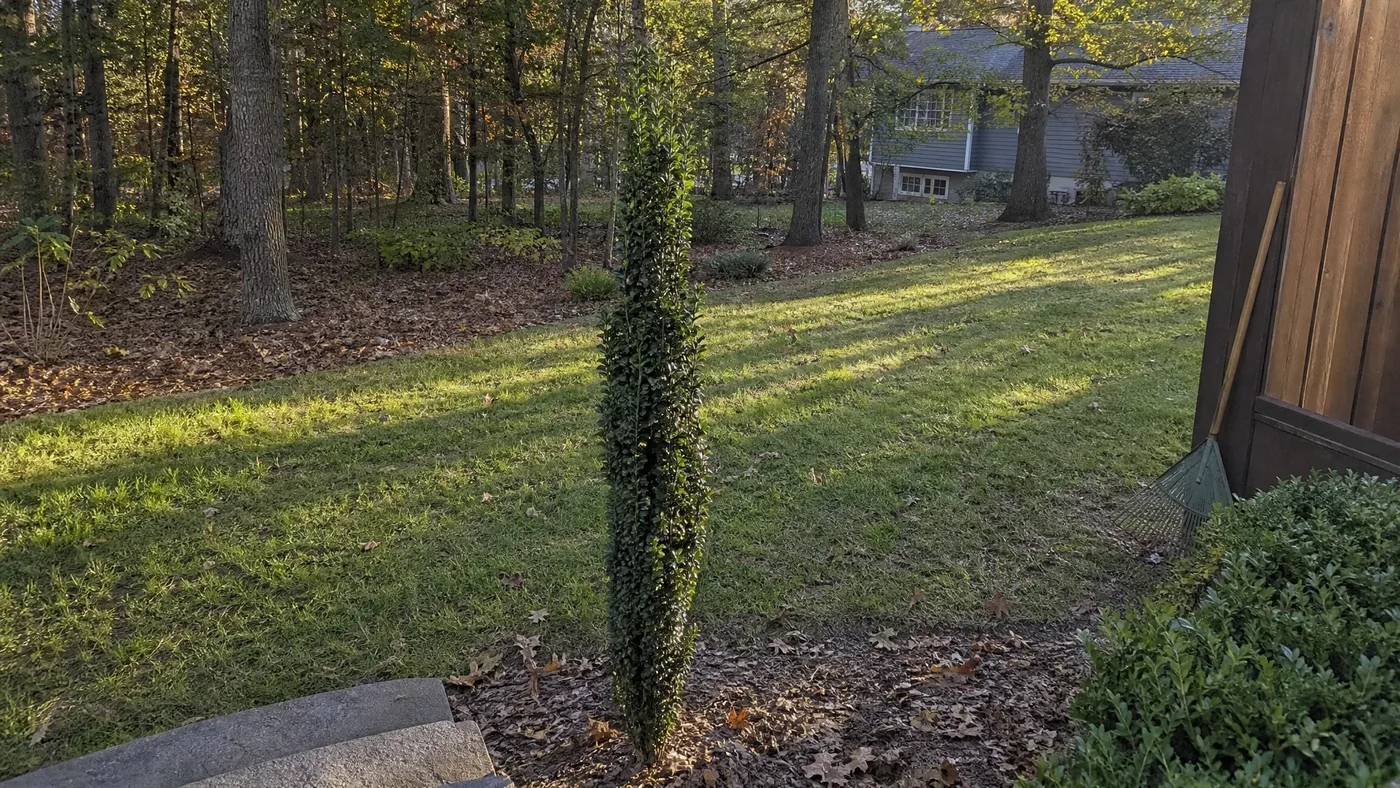
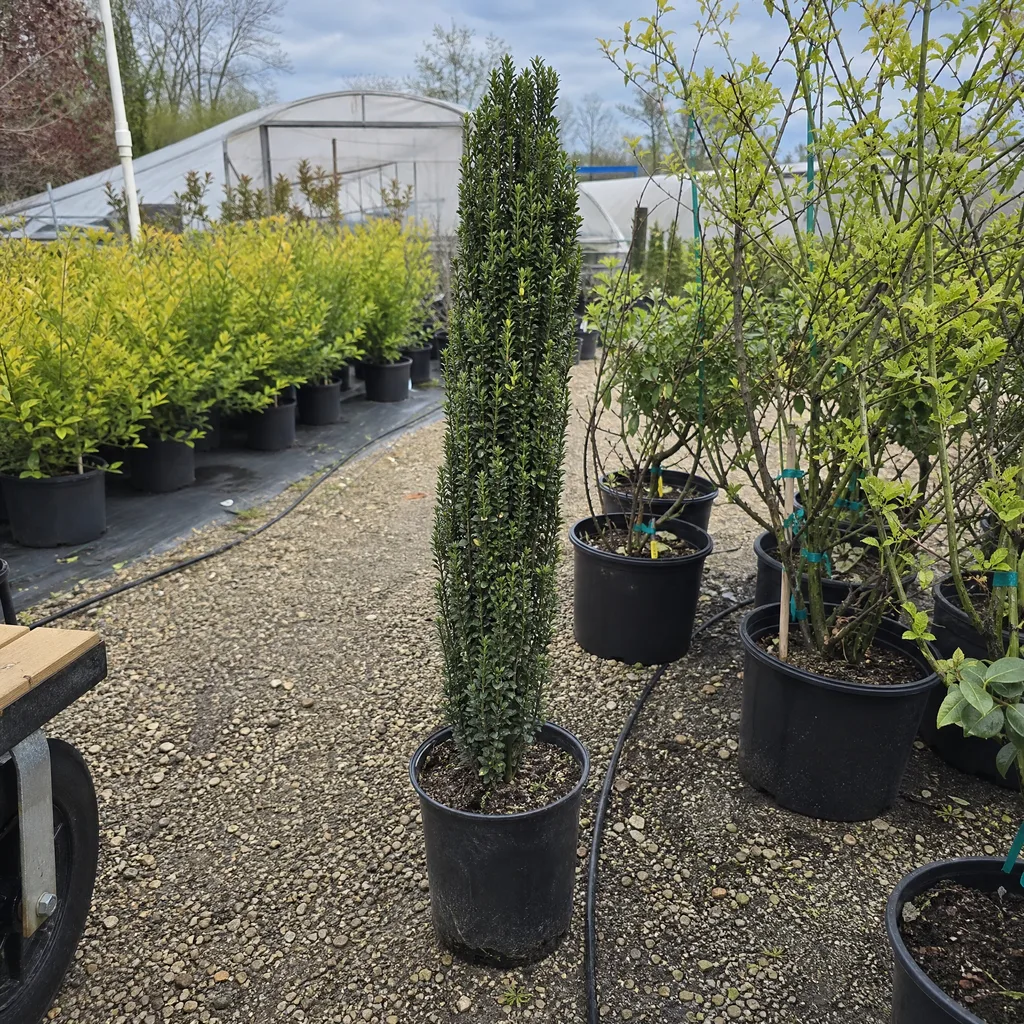
Sky Pencil is a cultivar of Japanese holly (Ilex crenata), and it behaves nothing like the shrubby species. The species spreads 5 to 8 feet wide, while Sky Pencil holds to 1–3 feet. Height depends on the source. NC State gives 4–10 feet, and the University of Arkansas describes an 8- to 10-foot evergreen only 12 to 18 inches across.
The leaves are small and look more like boxwood than holly, a resemblance Clemson Extension points out for the whole group. The plant is a vertical accent, not a mass of foliage. Prices vary by region and container size, so we leave numbers out. What we tell customers is that you are paying for years of slow growth, which makes the size you start with matter more than usual. Our container size buying guide covers that choice.
We grow ours on our own farms, so you can judge the straight central stem before you commit. Even so, the size you buy sets how long you wait.
Who Should Hesitate
A few situations make us tell people to think twice, and most come down to what the plant needs underground and how fast you need results.
- You want a privacy screen within a season or two. A young row reads as a line of separate poles, not a wall, and it fills out slowly.
- Your soil stays wet. Japanese hollies are very intolerant of poorly drained soils and especially prone to root rot.
- Your soil is alkaline. Alkaline soil turns the leaves yellow, and the plant also dislikes drought.
- You want berries. We explain below why this cultivar rarely delivers them.
The First Weeks in the Ground
Almost everything that looks wrong in the first weeks traces back to roots. Digging, or pulling a plant from its container, damages some fine roots and leaves the rest unable to take up water as fast as the leaves lose it. The plant then runs a small water deficit until new roots grow into the surrounding soil. That is why even a well-watered new holly can look dull for a while.
Because Sky Pencil does not do well under drought, the answer is steady moisture, not heavy watering. The root ball should stay damp but never sit in standing water, since the same species that hates drying out is prone to root rot in soggy ground. Our planting guide covers hole depth and backfill, which do more for these weeks than any later rescue.
Normal Adjustment Versus a Real Problem
You can sort most cases by whether the symptoms stay inside the plant or spread to new growth.
- Normal: slightly duller color, a few older inner leaves yellowing and dropping, and no new growth at all for several weeks.
- Worth acting on: yellowing that shows up on the newest foliage, which points to alkaline soil rather than transplant stress.
- Worth acting on: a plant that wilts while the soil is wet. That suggests poor drainage and possible root rot, so check the planting site before you add more water.
We are cautious about timelines here, because recovery depends on soil, weather and the size you planted.
Slow Establishment in the First Year of Sky Pencil Japanese Holly
Sky Pencil is a slow grower, plain and simple. In the first year that slowness is often close to zero above ground. A newly planted shrub spends its energy on building a root system that can support the leaves it already has, and only then adds height. A narrow column has little foliage to feed new roots, so the process is gradual.
One of the most common questions we get is whether a plant that has not grown in twelve months is dead. Usually it is not. Check that the leaves are firm and green, that a gentle scratch of a twig shows green tissue, and that the soil is draining. Sources do not give a reliable growth figure per year, so we will not invent one. The mature size and growth guide gives the longer picture.
What Helps Roots Along
Mulch keeps the root zone evenly moist, and a consistent watering rhythm protects the new roots. Planting in soil that is well drained and slightly acidic, with organic matter, gives roots the easiest path outward.
The common advice to feed a slow plant heavily to speed it up is one we do not follow. Extra nitrogen can push soft growth the roots cannot yet support, and it does not shorten the root-building stage.
What Snow Load Does to an Established Plant
Sky Pencil has a fastigiate form, with upright, clustered branches that it keeps without pruning. That is the strength in summer and the weakness in a snowy winter. Evergreen foliage catches wet snow, and in a column the weight lands on a small number of stems that all lean the same way. Under enough load the stems bow outward, and the neat pencil opens up.
The tissue reasons are straightforward, though we are reasoning from how stems behave, not from a measured study. Stems bend before they break, but bent for weeks, they can stay partly bowed once the snow melts. Frozen wood is also stiffer and more brittle, so a stem forced to bend in deep cold is the one most likely to crack.
Reducing the Damage
In snowy regions we suggest loosely wrapping the plant with soft ties in late fall, snug enough to hold the stems together without cutting into them. Brush heavy snow off gently from the bottom upward rather than shaking or knocking frozen branches. Plants in sheltered spots tend to stay straighter than plants in open, windy ones, and the plant needs protection from wind and cold.
We often see splayed plants in spring that were fine in the fall. Our winter care guide covers wrapping and placement in detail.
Why Sky Pencil Japanese Holly Rarely Fruits
Hollies carry male and female flowers on separate plants, and only the females make berries, and only when pollen from a male is available. Sky Pencil is a problem for this arrangement, because it is an all-female cultivar that needs a male pollinizer. A single plant, or a row of Sky Pencils with no male holly nearby, has nothing to pollinate it.
The flowers themselves are small, greenish white and fragrant, appearing in spring. Arkansas describes them as of no ornamental significance, though bees do visit them. So you get a modest, quiet bloom and a pollinator benefit, but no showy display.
When Missing Fruit Is a Drawback
Even with a male plant nearby, the payoff is limited. The small black fruit sits hidden below the foliage, so it will not light up a winter yard or become a feature for birds the way the berries on larger hollies do. If berry color is the reason you want a holly, choose a different one.
If berries are not your goal, the missing fruit is a small advantage. Eating the berries can cause a minor toxic reaction in people, and a plant that rarely fruits gives that concern little room to arise.
Strengths That Show Up Year After Year
The reasons we still grow and recommend it are all about shape and low upkeep. The column keeps itself, with no pruning needed to hold the pencil outline, which saves the shearing a hedge usually demands. At 12 to 18 inches across it fits where almost no other evergreen will, such as beside a doorway, along a narrow side yard or flanking a gate.
It stays green through winter, tolerates full sun to part shade, and is mildly resistant to deer. Pests are mostly occasional spider mites and nematodes, a shorter list than many shrubs carry. In a pot it works as an accent without becoming unwieldy, which our pots guide gets into.
Those strengths accumulate. Where a fast shrub needs trimming every year, Sky Pencil asks for watering, decent drainage and a little winter attention. It also suits formal designs, with a clear vertical line that repeats well, but it is not suited to naturalistic plantings. Treat it as an accent and you will be happy with it.
Weighing Sky Pencil Japanese Holly Against Your Site
The test is simple: match four things, climate, soil, winter and patience, against what the plant needs. On climate, it grows in zones 5a through 8b, while Oregon State says it is hardy to USDA Zone (5) 6. Heat and humidity cause trouble in zones 8 and 9, so the edges of the range need extra care.
This table sets the trade-offs next to the conditions where each one matters.
| Factor | Good match | Think twice |
|---|---|---|
| Climate | Zones 6–7, with mild or sheltered winters | Hot, humid zone 8 sites, or exposed zone 5 sites |
| Soil | Well drained and slightly acidic | Wet clay or alkaline soil |
| Snow | Light snow, or a sheltered position | Heavy wet snow in an open yard |
| Patience | Happy with an accent that grows slowly | Needs a fast screen or berries |
If you are still comparing it with another narrow evergreen, our comparison with Italian cypress sets the two side by side. Mostly "good match" answers mean you will likely be pleased.
Who Will Enjoy Sky Pencil Japanese Holly
Sky Pencil asks for patience, drainage and a little winter attention, and it repays that with a tidy vertical line that needs almost no pruning. Its real drawbacks are slow establishment, a tendency to splay under heavy snow and very little in the way of berries. None of these is hidden once you plan around them, and none can be fixed by wishing.
The gardener who will be happy with it wants a narrow, formal accent in well-drained, slightly acidic soil and is content to wait. If you need a fast screen, grow in wet or alkaline ground, or want berries, pick something else.
Sky Pencil Japanese Holly
Nursery-grown Sky Pencil Japanese Holly in sizes from 1-2 ft. #1 Container, shipped to your door.
From $80.55
Shop Now →Each Sky Pencil we raise gets full sun to part shade and well-drained, slightly acidic soil, which is how we get a straight central column and sound roots that suit this holly's slow, upright habit. We are a small team of growers tending top-quality shrubs on our own farms. If the pros outweigh the cons for your garden, pick out a Sky Pencil of your own.