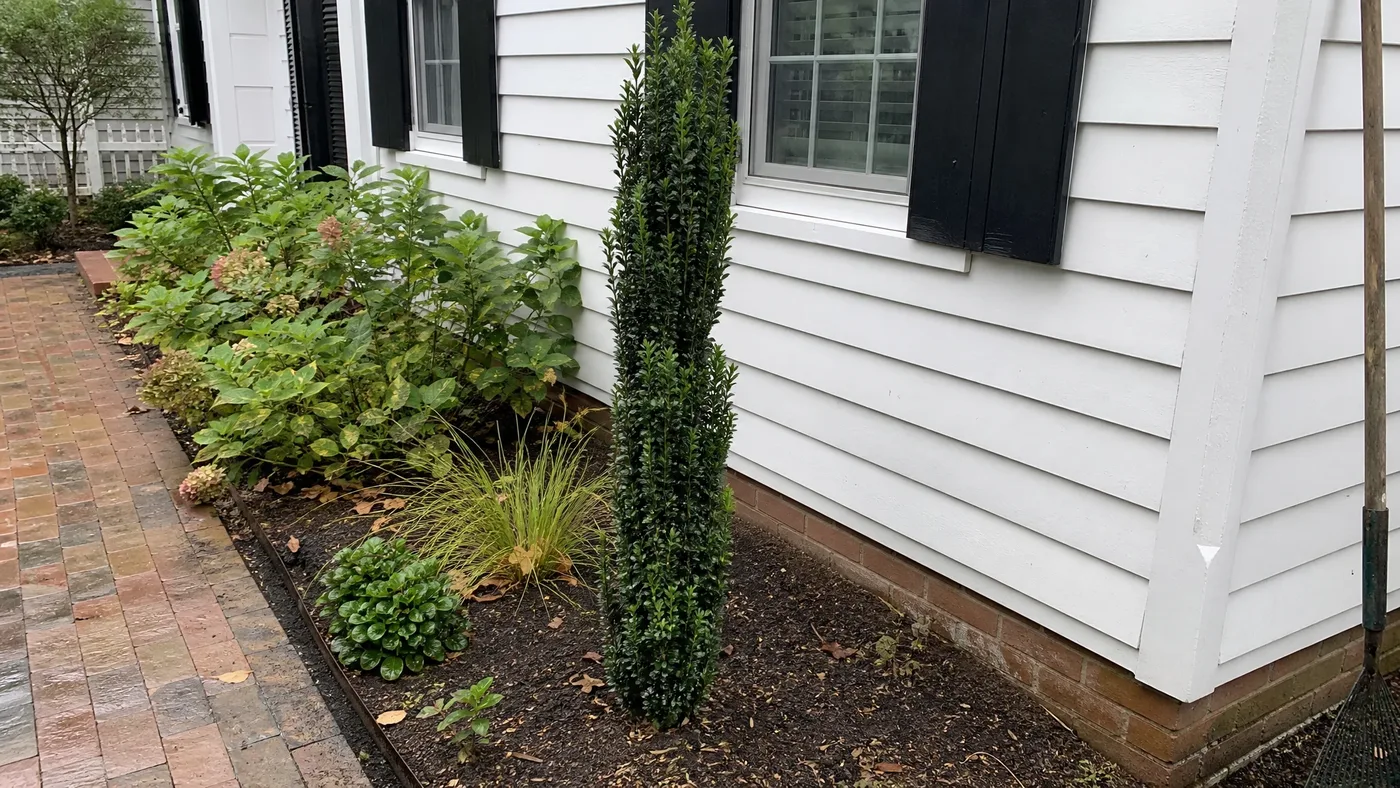
Sky Pencil Japanese Holly Sun Requirements: Full Sun or Shade?
A common mistake with Sky Pencil is planting it in a shady corner because most people think hollies want shade. They don't, at least not this one. In low light, this narrow cultivar stretches, thins out and leans, and the tight pencil shape you bought it for is gone within a couple of seasons.
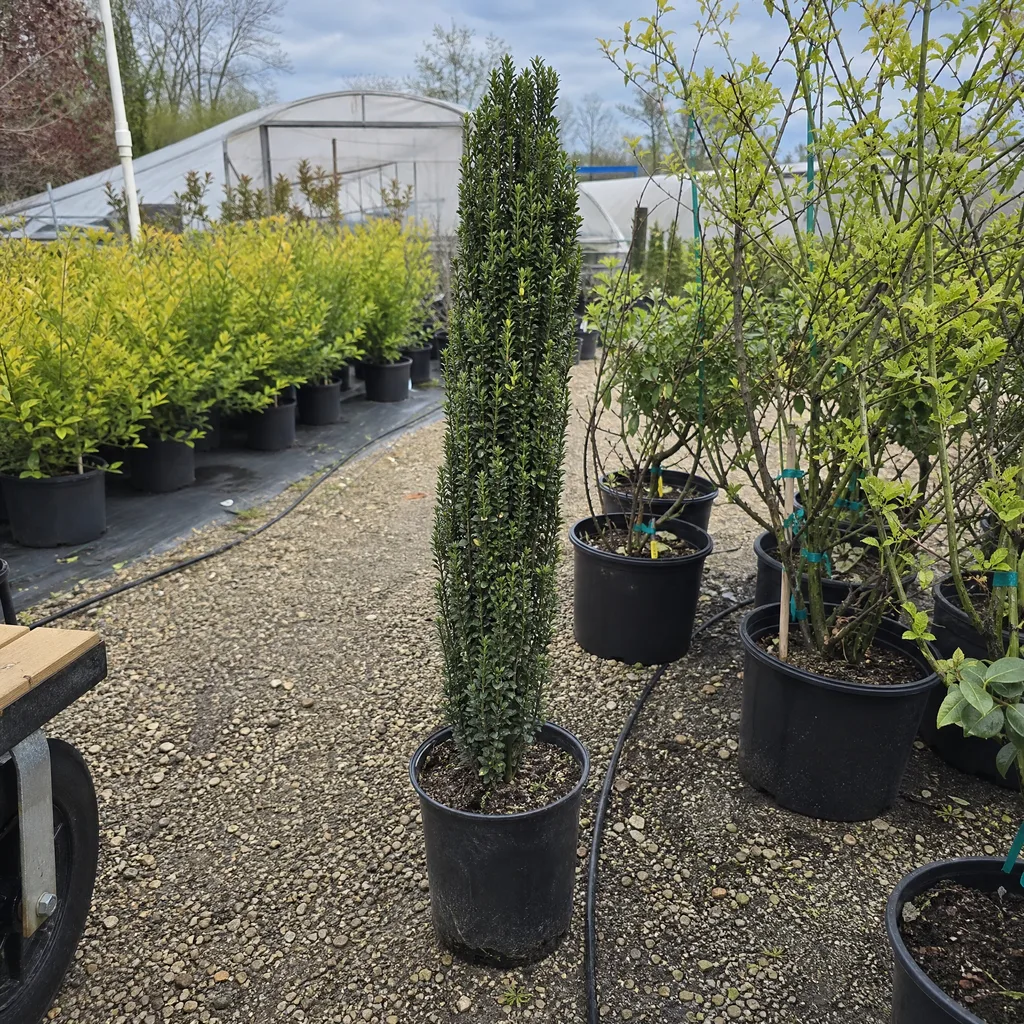
Get the light right and you get a slim, glossy evergreen column that holds its shape all year with almost no pruning. That is what makes it work as a screen, a gate marker or a vertical accent beside a door. In this article, we'll go through the short answer on sun, how to map your site and pick a spot, how to adjust for your zone and the seasons, and what a healthy plant looks like in year five.
Sky Pencil Sun Requirements: The Short Answer
Here is what we tell customers before they pick up a shovel.
Sky Pencil grows best in full sun, which means 6 or more hours of direct light a day, and it also takes sun to part shade. Choose the sunniest spot you have that does not bake in reflected heat. Common advice says to tuck holly into shade so the leaves don't scorch. We don't follow that for Sky Pencil, because shade is what ruins its narrow form. In zone 8 and warmer, where NC State cautions about heat and humidity, pick a spot with afternoon shade.
If your site gets less than 3 hours of direct light, it will develop legginess and thin foliage. The plant tends to stretch and splay open when reaching for more light, losing the tight silhouette that makes it special. A narrow evergreen that tolerates less shade may suit that spot better.
What You'll Need Before You Start
Gather these items first so you can finish the site check in one pass.
- A clear view of your planting site over at least two days (to observe morning, midday, and afternoon light)
- Your USDA hardiness zone (Sky Pencil is listed for zones 5a through 8b)
- A soil pH test kit
- Knowledge of your regional climate, especially if you live in a hot, humid area
- Planting supplies ready for either spring or fall installation
Step-by-Step: Finding and Preparing the Perfect Light
Work through these steps in order. Steps 1 to 5 get the plant in the ground, and the next section covers what to do afterward.
Step 1: Map Your Yard's Light Pattern Over Two Days
Visit your potential planting site in early morning, midday, and late afternoon on both a clear day and an overcast day. Mark where direct sun hits and where shade pools.
Count the hours. A spot with 6 or more hours of direct sun is full sun and suits Sky Pencil well. A spot with 3 to 6 hours is part shade and still works, though the column will be a little looser. Where afternoon sun is harsh, foliage can take on a bronze cast, so lean toward morning sun.
Step 2: Confirm Your USDA Zone and Local Heat Profile
Your zone decides how much shelter the plant needs from sun and wind.
Sky Pencil is listed for zones 5 through 8, and we treat zone 6 as the safe floor for an open site. If you are at the cold edge, shelter the plant from heavy winter wind and low winter sun, which intensify the bronze leaf color that cold brings. If you are in zone 8 or the warm southern end of zone 7, favor afternoon shade to protect the foliage from scorch. Our hardiness zone guide goes deeper on borderline sites.
Check your local extension service if you are on a zone boundary or in a microclimate (a hilltop, a valley bottom, or near reflective pavement).
Step 3: Test Your Soil and Sunlight Relationship
Light and soil moisture work together, so test the soil before you commit to a spot.
Run a soil pH test. Sky Pencil takes acid or neutral soil that is moist but well-drained, and it does best with plenty of organic matter. Full sun sites dry faster, so amend sandy soil with compost to hold water. Part shade sites hold moisture longer and reduce irrigation.
If your soil runs alkaline, part shade can help slow the yellowing (chlorosis) that alkaline conditions trigger, but you still need to acidify. Our soil guide covers the amendments.
Step 4: Choose Your Final Planting Spot
Based on your light map and soil test, pick the spot. Ideal candidates include:
- East-facing foundations (morning sun, afternoon shade from the house)
- Part-shade edges along a tree canopy (dappled light, air circulation)
- Full sun sites in cooler zones (5 or 6) or northern regions where afternoon shade is not necessary
- Shaded spots only if they receive at least 4 hours of direct or bright indirect light
Avoid deep shade beneath evergreens, west-facing walls that radiate afternoon heat unrelenting, or wet, poorly drained hollows where moisture lingers. The combination of low light and wet feet invites root rot and weak growth. We suggest shade-tolerant companion plants for the spots in between.
Step 5: Plant in Spring or Fall, Avoiding Summer Heat
Time your planting for spring or fall, when temperatures are mild and the plant can establish roots before stress sets in. Summer planting adds water pressure and puts the young plant at risk of sun scald. If you must plant in summer, choose a part-shade location and water deeply three times a week for the first month.
Plant with the top of the root ball level to the surrounding soil. Space multiple plants 1 to 3 feet apart if you are building a hedge or screen. Sky Pencil Holly's narrow width (1 to 3 feet at maturity) means close spacing is practical for living privacy screens.
For detailed planting steps, refer to our complete planting guide.
Adjusting Sky Pencil Through the First Year and the Seasons
The first year tells you whether you chose well. Check the plant each season and adjust before small problems set in.
Step 6: Monitor Growth Through the First Year
Watch your newly planted Sky Pencil Holly for the first growing season. If it stays upright, dense, and green, your light choice was correct. If it starts to lean or reach sideways toward a light source, it is not getting enough direct sun at that spot. If the foliage develops bronze tones by late fall and does not return to solid green in spring, your plant may be in an exposed location where winter wind and cold are intensifying color stress.
Growth is slow, so changes take time to show. Customers usually ask us whether a plant that hasn't grown taller by the end of its first summer is failing. Most of the time it is just putting out roots, so do not judge a first-season plant harshly.
Step 7: Adjust for Seasonal and Regional Light Shifts
In colder zones (6 and 7), winter sun angles are lower, and afternoon shade from a deciduous tree loses its protective effect once leaves fall. Monitor your plant's exposure. If winter bronzing appears severe (dark purple or brown tones that linger past spring), consider a shade cloth or windbreak for the following winter. A simple burlap screen on the southwest side buffers harsh sun and drying wind.
In warmer zones (8 and the upper South), afternoon shade becomes more valuable as the season heats up. If you planted in full sun and notice declining vigor or scorched foliage by midsummer, add dappled shade from a tall tree or a structure on the west side. Make sure the shade is not so dense that it blocks most of the light all year.
Common Light-Related Problems and How to Fix Them
Use this table to match what you see on the plant to a likely cause and a fix.
| Problem | Likely Cause | How to Correct It |
|---|---|---|
| Foliage thins and the plant looks leggy or sparse | Not enough direct sunlight (fewer than 3 to 4 hours per day) | Relocate to a sunnier spot if possible. Do not shear to thicken it, because that only removes the growth you have. Recovery takes a full season. |
| Plant splays or leans to one side | Light arrives from one direction only | Open up the canopy on the shaded side or move the plant. Stake the leader loosely for the first year if it keeps leaning. |
| Foliage turns bronze, purple, or brown in winter | Cold exposure combined with direct winter sun and wind, especially in zones 5 and 6 | Install a burlap windbreak on the southwest side before the first hard frost. Relocate to an east-facing or part-shade site. Bronze coloring usually fades as temperatures warm in spring. |
| Yellowing leaves (chlorosis) | Alkaline soil, made worse by full-sun stress | Add afternoon shade if you can. Amend soil with elemental sulfur or an acidifying fertilizer. Test pH again and bring it toward acid, ideally below 6.0. |
| Slow or stunted growth even after one year | Low light combined with poor drainage or dry soil | Assess sunlight again and confirm at least 4 hours. Add mulch to retain moisture. Improve the soil with compost. Feed lightly with a balanced fertilizer in early spring. |
Habits That Prevent Light Problems
A few simple habits head off most of what the table lists.
Start with observation. Your site's light changes month to month. Spend two weeks watching before you dig.
Mulch the root zone. A 2 to 3-inch layer of bark mulch keeps the soil cooler in full sun and helps retain moisture. Keep watering consistent too, because inadequate water plus intense sun compounds stress. Keep the plant away from light-colored pavement, gravel and white walls, which reflect heat onto the foliage.
Skip the shears. A lot of advice says to shear holly to make it dense. We don't do that with Sky Pencil. We often see people shear a thin plant in low light, and it only ends up with less foliage. Fix the light instead. Pruning is minimal, and the narrow column is natural.
What Sky Pencil Looks Like in Year Five
Here is what to expect as the plant matures and how to read what it shows you.
In the right light, your Sky Pencil should keep its narrow, upright silhouette and dense, glossy dark green foliage year-round. Growth is slow, so it takes years to reach a mature height somewhere between 4 and 10 feet, and it stays only 1 to 3 feet wide. In our rows, plants in full sun fill their column noticeably faster than those at the shady end. This steady pace is an asset in formal landscapes where restraint is valued.
With insufficient light, you will notice thinning, leaning, and an overall loss of density within a few months of the growing season. Correcting the problem requires moving the plant or significantly opening up the surrounding canopy, both of which cause short-term stress.
Winter foliage color changes (bronzing or purpling) are common and usually harmless, especially in zones 6 and 7 where cold is intense. If the color fades as temperatures warm in spring, your plant is fine. If it persists through summer, investigate soil alkalinity or continued stress from poor drainage or low light.
For comprehensive care after planting, see our complete care guide.
Quick Reference: Sun and Light Checklist
Keep this checklist handy while you choose a site and plant.
| Item | Details |
|---|---|
| Ideal light range | Full sun (6 or more hours of direct sun daily) to part shade |
| Zones where full sun is best | Zones 5 and 6 (cooler climates) |
| Zones where part shade is preferable | Zones 7 and 8 (warmer climates, hot afternoons) |
| Minimum light for survival | 3 to 4 hours, but the plant will thin and lean |
| Planting season | Spring or fall, avoiding peak summer heat |
| Soil pH for best results | Acid to neutral |
| Spacing for hedges | 1 to 3 feet apart |
| Annual growth rate | Slow |
| Winter foliage stress to watch for | Bronze or purple tinting (especially zones 5 to 7) |
| Common light-related mistake | Planting in deep shade expecting it to thicken over time |
Give Sky Pencil the Light and It Keeps Its Shape
Map your light before you plant, aim for 6 or more hours of sun, and add afternoon shade if you garden in the hot, humid South. Never settle for a dark corner, and watch the first year closely. When the plant leans or thins, fix the light rather than reaching for the shears.
Sky Pencil Japanese Holly
Nursery-grown Sky Pencil Japanese Holly in sizes from 1-2 ft. #1 Container, shipped to your door.
From $80.55
Shop Now →Customers come back to us for Sky Pencil that holds its slim, dark green column once it is in the right spot. We grow and sell top-quality plants from our own farms, and we want yours to look sharp in year five and beyond.