
Watering Sky Pencil Japanese Holly: A Simple Care Schedule
Water is where most Sky Pencil Japanese Holly problems begin. Let the soil swing between bone dry and soggy, and this narrow evergreen bronzes, splays open at the base, or loses roots to rot. Keep it evenly moist, and you get what you planted it for: a dense, glossy green pole that holds its shape year-round, stays only a foot or two wide, and climbs slowly toward 6–8 feet tall.
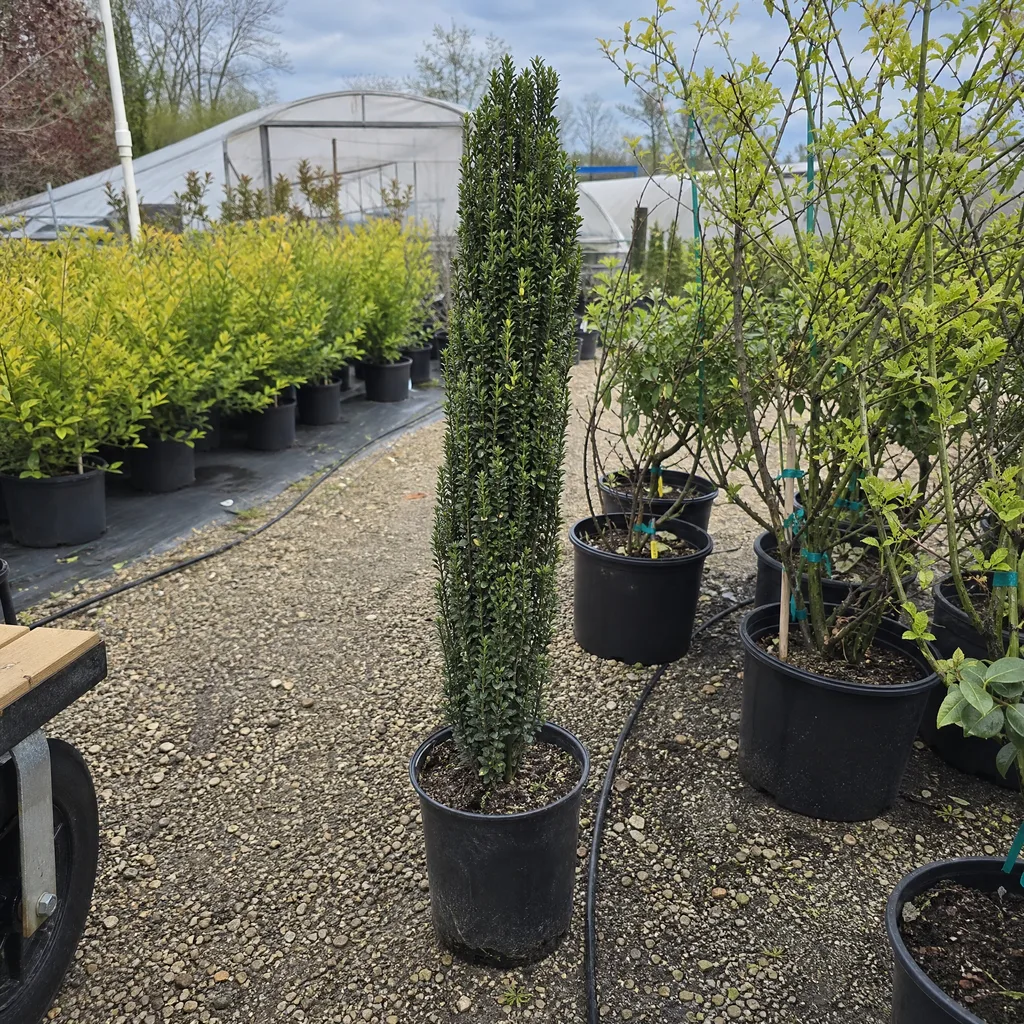
That tight shape has a catch. A slow-growing evergreen shrub takes a long time to recover from a bad season, and a pole that has lost its lower branches never fills back in. Whether yours is a screen along a side yard or a pair of accents by a door, a few good watering habits in the first years pay off for a decade.
Read on for how to water a new planting, how mulch and rainfall change the schedule, what each season asks for, the mistakes we see most, and how pots differ from the ground.
Why Consistent Moisture Matters for Sky Pencil Holly
Sky Pencil Japanese Holly evolved in the woodlands and gardens of Japan, where rainfall is regular but rarely extreme. The cultivar's fine, dense foliage means it cannot store large reserves of water in leaves or stems the way some drought-tolerant plants do. Instead, it relies on steady moisture in the soil to keep its glossy, dark green leaves crisp and its growth pattern upright.
When soil dries out between waterings, the root system struggles to maintain hydration to all parts of the plant. You may notice leaves turning dull, bronzing at the tips, or the plant beginning to splay open at the base. Conversely, waterlogged soil suffocates roots and invites fungal root rot. The goal is the middle ground: moist (not soggy) soil that stays evenly watered.
What You'll Need to Water Sky Pencil Holly Properly
You don't need much, and most of it you probably own already. Gather these before the first watering.
- A garden hose with a soft spray nozzle or a soaker hose
- A soil moisture meter (optional but helpful for beginners)
- Mulch (shredded bark or wood chips, 2-3 inches deep)
- A watering can for container plants (if growing in pots)
- Access to water that does not contain high salt content (if possible)
A simple moisture meter removes guesswork. Stick it into the soil 3 inches deep near the base of the plant. If the reading shows "moist," hold off watering. If it shows "dry," water thoroughly. This is especially useful during spring and early summer, when growth is most active.
Step-by-Step Watering Guide for Sky Pencil Holly
These steps follow the plant's first seasons in order, from the day it goes in the ground to the point where it can mostly look after itself.
Step 1: Water Newly Planted Holly More Frequently
A freshly planted Sky Pencil Holly (whether planted in spring or fall) needs more frequent watering for the first 4-6 weeks while its roots establish in the new soil. Water 2-3 times per week during this period unless rain is substantial. After six weeks, transition to your regular maintenance schedule.
If you haven't set the plant yet, our planting guide covers hole depth and backfill, which decide how well water reaches the roots.
Step 2: Apply Mulch to Buffer Soil Moisture
Spread 2-3 inches of mulch (shredded bark or wood chips) in a ring around the base, keeping it 6 inches away from the main stem to prevent rot. Mulch acts as a thermal buffer and moisture conservator, reducing how often you need to water during dry spells. In zone 8 or in areas with intense summer sun, mulch also helps keep soil cooler, reducing transplant shock on newly planted hollies.
Step 3: Set Your Baseline Watering Schedule
During the growing season (spring through early fall), water your Sky Pencil Holly once or twice per week, depending on rainfall and temperature. In zones 6-8, where this cultivar performs most reliably, spring and early summer typically see adequate rainfall. If your area receives less than 1 inch of rain per week, add supplemental watering to reach that target.
In peak summer heat, especially in zone 8 where temperatures climb higher, you may need to water twice weekly. Increase frequency if your holly is in full sun, which exposes foliage to more evaporative stress.
A common tip is to water on a fixed day every week, whatever the weather. We don't follow it. Push a finger 3 inches into the soil first. If it is dry, water. If it is damp, wait. In our rows, the plants that struggle are almost always the ones watered by the calendar instead of by feel.
Step 4: Water at the Root, Not the Foliage
Direct water to the base of the plant, soaking the soil rather than wetting the leaves. This serves two purposes: water reaches the roots where it is needed, and wet foliage left to dry slowly invites fungal leaf spot and powdery mildew. Use a soaker hose or the gentle spray setting of a garden hose held low to the ground.
Apply water until the soil is visibly moist 4-6 inches deep. On sandy or loamy soil (which Sky Pencil Holly prefers), this typically takes 5-10 minutes per plant.
Step 5: Adjust for Rainfall
If your area receives rain, count that toward your weekly moisture target. A quarter-inch rain needs supplementing to reach 1 inch total. A half-inch rain means you may skip one watering that week. Measure rainfall with a simple rain gauge set near your planting bed, or check your local weather service's recorded precipitation.
Step 6: Ease Off as the Plant Matures
By the third or fourth year, the roots reach well past the original rootball. Mature plants still follow the seasonal schedule below, but they forgive a missed week far better than a new planting does. Watch for dry spells instead of watering out of habit. That wide root spread also matters if you ever need to move an established plant.
Seasonal Watering Adjustments for Sky Pencil
Water needs change as growth speeds up and slows down, so we split the year into four stretches. The dates suit most of the range where this holly does well.
Spring (April through May)
As new growth emerges and temperatures warm, increase watering frequency if rainfall is below average. Spring is when your holly is most actively growing, with new leaf and stem formation demanding steady soil moisture. Light annual feeding in early spring (with a balanced or acid-forming fertilizer) supports this growth, but only if the plant has adequate water to absorb nutrients.
Early Summer (June through July)
This is your highest-demand watering season. Heat and active growth combine to deplete soil moisture quickly. Water twice weekly unless rain is frequent. In zone 8 areas or in southern climates, afternoon wilting can signal that your watering schedule is too light. If foliage looks dull or droops slightly by late afternoon, increase frequency.
Late Summer through Fall (August through October)
As temperatures cool and day length shortens, growth slows. Reduce watering frequency slightly to once per week, but continue monitoring rainfall. Fall weather is unpredictable, so a dry September still demands regular watering. Do not let the plant enter winter in dry soil.
Winter (November through March)
In zones 6-7, winter dormancy dramatically reduces water demand. Soil stays cooler and water evaporates more slowly. Water every 2-3 weeks unless the soil is frozen. If winter is dry (below-average snowfall and no rain), water more often than usual, whenever the soil is not frozen, to prevent desiccation, particularly for plants in exposed sites where cold wind accelerates moisture loss from foliage.
In zone 8, where winters are milder, maintain once-weekly watering if the plant is actively growing or if soil tests dry.
This holly is listed as hardy in zones 5a through 8b, so winter watering matters most at the cold end of that range. Our winter care guide covers wind protection and wrapping for exposed sites.
Common Watering Mistakes and How to Avoid Them
Sources describe the soil this holly wants as moist but well-drained. Nearly every mistake below is a miss on one side of that line or the other.
Overwatering (The Most Common Error)
One of the most common questions we get is whether yellow leaves mean the plant needs more water. On this holly, it usually means less.
Sky Pencil Holly does not tolerate waterlogged soil. Roots sitting in wet soil for days develop black root rot, caused by the fungus Thielaviopsis. Once established, root rot is nearly impossible to treat. Signs of overwatering include yellowing foliage that lacks the plant's typical glossy dark green, soft or mushy soil, and a foul smell near the base of the plant.
To prevent this, always feel the soil before watering. If it is wet, wait another 2-3 days. Ensure your planting site has good drainage. If your garden has heavy clay soil, work compost into the planting area. Plenty of advice says to mix sand into clay, but we don't, because sand and clay together can set up almost like concrete. Our soil guide covers amending in more detail.
Underwatering
Prolonged drought stresses the plant and slows growth, and this cultivar has a slow growth rate to begin with. Foliage may bronze or turn dull gray, especially in exposed sites or during winter cold. A plant that dries out repeatedly may never fully recover its dense columnar form, and if underwatering continues for weeks, branch dieback can occur.
Using High-Salinity Water
If your tap water is noticeably salty or you live in a region with high-mineral water, flush the soil occasionally with distilled water or rainwater. Salt accumulation can cause leaf burn and reduce nutrient availability. Sky Pencil Holly has moderate salt tolerance, but it is not designed for highly saline conditions.
Watering Sky Pencil Holly in Containers
Container-grown Sky Pencil Holly needs more frequent watering than in-ground plants because potting soil drains faster than garden soil. Water when the top inch of soil feels dry to the touch, which may be every 2-3 days in warm weather or once weekly in cool periods.
In zones 6-7, move containers to a sheltered location for winter or wrap the pot to insulate the roots. Potted plants are more vulnerable to freezing root damage than plants in the ground. Water container plants less often in winter, but do not let the soil dry out completely.
For pot size, potting mix and drainage, see our guide to growing Sky Pencil in pots and containers.
Quick Reference Watering Checklist
Use this table as a quick check against the season, and always confirm with the soil before you water.
| Season | Watering Frequency | Signs to Water | Watch For |
|---|---|---|---|
| Spring (Apr-May) | Once to twice weekly, depending on rain | Soil dry 3 in. deep, new growth emerging | Underwatering during active growth |
| Early Summer (Jun-Jul) | Twice weekly, more in zone 8 or full sun | Soil dry 3 in. deep, afternoon foliage dull | Overwatering in rainy weeks |
| Late Summer to Fall (Aug-Oct) | Once weekly, increase if no rainfall | Soil dry 3 in. deep, approaching winter | Dry fall conditions, prepare for winter |
| Winter (Nov-Mar) | Every 2-3 weeks (zones 6-7), weekly in zone 8 | Soil dry to touch, winter desiccation risk | Frozen soil, forgetting to water during thaws |
| Containers (all year) | Every 2-3 days in warm weather, weekly in cool | Top inch of soil dry, pot feels light | Root freezing in winter, overwatering in rain |
Keeping Your Sky Pencil Slim and Green for Years
Check the soil before you water, mulch every planting, and give new hollies extra attention for their first six weeks. Ease off as the roots spread, and never send the plant into winter dry. Those habits matter more than any exact schedule.
Sky Pencil Japanese Holly
Nursery-grown Sky Pencil Japanese Holly in sizes from 1-2 ft. #1 Container, shipped to your door.
From $80.55
Shop Now →As a small grower, we care about getting watering right because we raise these hollies on our own farms and sell only top-quality plants. We want yours to look as good in year five as the day it left our rows.