Fertilizing Sky Pencil Japanese Holly: What, When and How Much
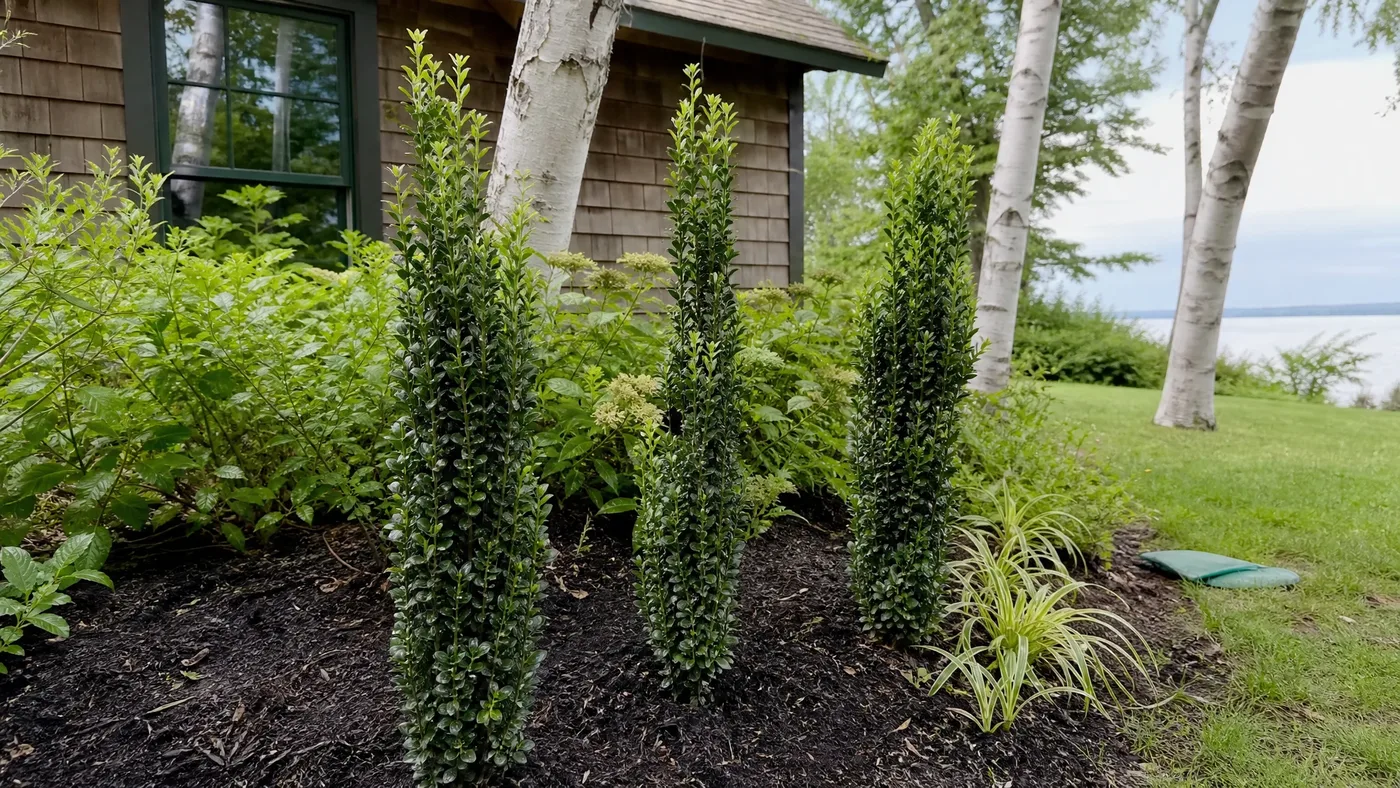
Feed a Sky Pencil wrong and you lose the one thing you planted it for, a tight, dark green column. Too much nitrogen pushes soft, leaning growth that opens up in the middle. Too little leaves the foliage pale and thin by year five. Feed it right and the column stays dense from the ground to the tip, whether it is a lone accent or part of a row screen.
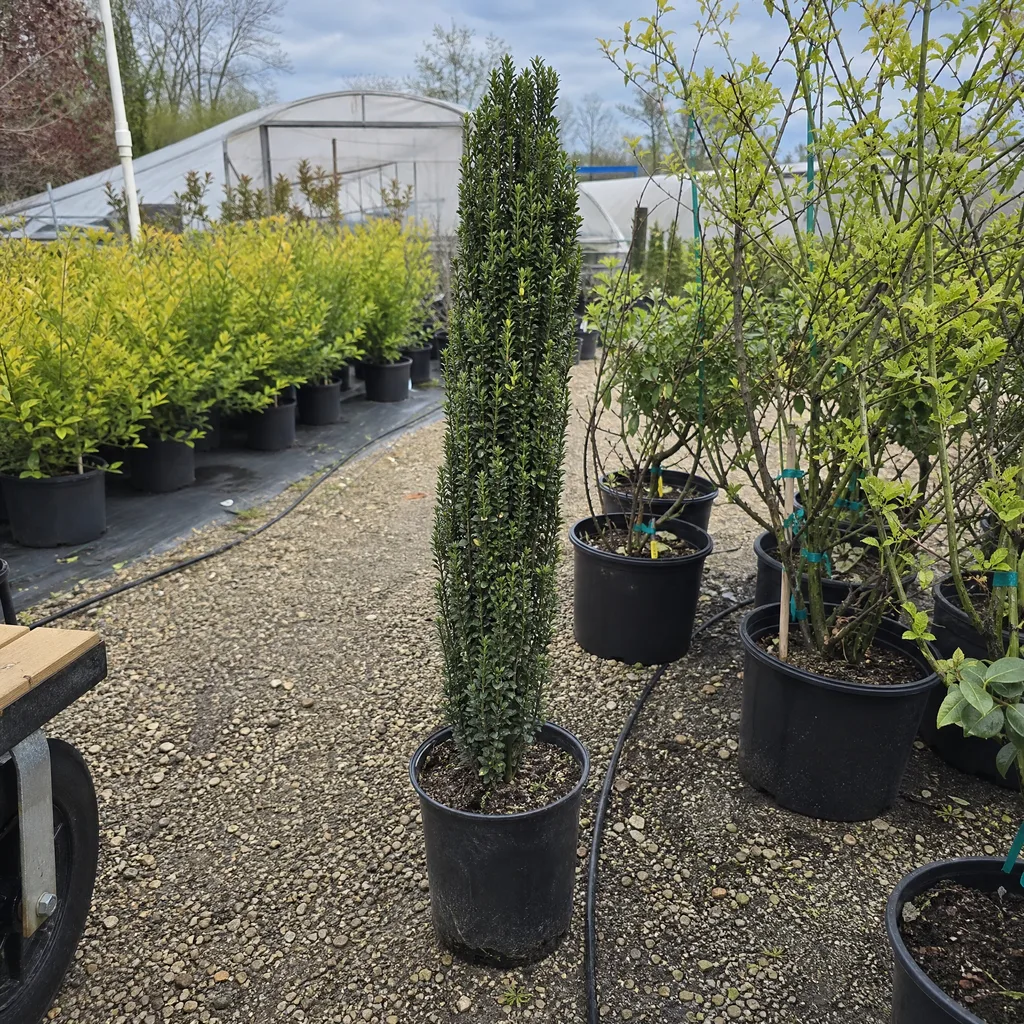
This is a slow plant, so it asks for very little. Read on for the one-feeding-a-year plan, the right fertilizer and soil pH, exact timing, a seven-step application routine, and the mistakes we see most often. The whole job takes about ten minutes a year.
Fertilizing Sky Pencil at a Glance
Here is the short version of what we tell customers. Feed once a year in early spring with a holly or acid-forming fertilizer, water it in, and leave it alone until next year. That plan suits nearly every Sky Pencil, from a single entry accent to a long row planted as a screen. For the full picture, see our Sky Pencil Japanese Holly care guide and come back here for feeding.
We don't follow the common advice to feed shrubs twice a year or to give a pale plant more food. Sky Pencil grows slowly and stays only 1 to 3 feet wide, while the species spreads 5 to 8 feet, so there is no space to fill. Extra nitrogen only makes the column lean and splay.
Sky Pencil Japanese Holly is an evergreen shrub that holds its narrow, columnar form year-round.
To maintain that dark green foliage and support upright growth, the plant needs consistent access to nutrients. However, because the growth rate is slow by design, the fertilizer demands are modest. Established plants often need little supplemental feeding beyond what naturally occurs in your soil, but a light annual feeding in early spring gives new growth a boost and ensures the foliage stays dense and vibrant through the growing season.
Soil, pH and the Right Fertilizer for Sky Pencil
Sky Pencil takes acid or neutral soil but does best on the acid side, and drainage matters as much as pH. Our soil guide covers how to amend a poor site.
Sky Pencil Japanese Holly performs best in moist, well-drained soil that is acidic to slightly acidic, roughly 5.0 to 6.5 on the pH scale. This preference for acidic soil is key to choosing the right fertilizer. When soil pH creeps toward neutral or alkaline, the plant can develop chlorosis (yellowing leaves caused by iron deficiency), even when nutrients are present in the soil.
The best fertilizer for Sky Pencil Holly is one formulated to maintain or slightly lower soil pH. Look for a balanced or acid-forming fertilizer, specifically one labeled as an azalea or holly-type fertilizer. These products are designed to release nutrients while keeping soil in that ideal slightly acidic range. A balanced formula (such as 10-10-10 or 12-4-8) works well, or you can choose a fertilizer specifically marketed for evergreen shrubs or hollies.
When to Fertilize Sky Pencil Holly
The best window for Sky Pencil is early spring, just as new growth begins. In the zones 5 to 8 range where it grows, that means late February through March in the warmer part and a few weeks later in the colder part, once you see leaf buds breaking. Heat and humidity in zones 8 and above can stress this plant, so don't push growth there.
Apply fertilizer before the main spring flush, so nutrients are available when the plant needs them most. Avoid fertilizing in late fall or early winter. Late-season feeding can stimulate tender new growth that is vulnerable to winter damage in cold exposed sites, where your holly's foliage may already bronze or purple-tinge in response to cold.
For an established plant, one annual feeding is usually sufficient. Young, recently planted hollies or plants showing signs of slow growth can benefit from a second light application in mid-summer (June or July). It is optional, and we skip it for most plants.
Step-by-Step: How to Fertilize Sky Pencil Holly
Work through these steps in order. Start by gathering what you need, then move on to the application itself.
What You Need
Have these ready before you head out to the plant.
- Balanced or acid-forming fertilizer (azalea, holly, or evergreen-type, granular or liquid)
- Measuring spoon or cup (for granular products)
- Garden gloves
- Watering can or garden hose with a gentle spray setting
- Mulch (optional but recommended)
Step 1: Choose Your Fertilizer Product
Visit your local nursery or garden center and select a balanced or acid-forming fertilizer. If the label says "formulated for azaleas, rhododendrons, or hollies," it is a good match.
Read the NPK ratio on the package (the three numbers indicating nitrogen, phosphorus, and potassium). A 10-10-10 or 12-4-8 ratio is appropriate for Sky Pencil Holly.
Granular fertilizers are the most common and easiest to apply. Liquid concentrates work too, but they require diluting and more frequent small applications.
Step 2: Check Your Soil Moisture
Before applying any fertilizer, ensure the soil around your holly is moist but not waterlogged. If the soil is bone-dry, water the plant thoroughly a day or two before fertilizing. Fertilizer applied to dry soil can burn roots. If watering your Sky Pencil Holly is part of your routine, a moist soil at application time is ideal.
Step 3: Clear the Base
Remove any debris, fallen leaves, or twigs from the soil surface in a 12-inch radius around the base of your holly. This ensures the fertilizer makes contact with the soil, not organic matter on the surface.
Step 4: Apply Granular Fertilizer
If using a granular product, follow the package instructions for the amount. Most balanced fertilizers recommend applying 1 to 2 tablespoons per foot of shrub height, or use the rate printed on the label. For a Sky Pencil Holly that is 4 to 6 feet tall, this typically means 4 to 12 tablespoons (roughly 0.5 cup) per plant. Scatter the granules evenly over the moist soil in a ring around the base, staying 4 to 6 inches away from the stem to avoid burning it.
Step 5: Water Thoroughly
After applying granular fertilizer, water the area deeply with a gentle stream from a hose or watering can. This dissolves the fertilizer and carries nutrients into the root zone. Water until the soil feels moist 4 to 6 inches down. Don't skip this step, because dry granules left on the surface will not benefit your plant.
Step 6: Mulch (Optional but Recommended)
If your holly is not already mulched, apply a 2-inch layer of organic mulch (such as shredded bark) around the base, keeping it 4 to 6 inches away from the stem. Mulch helps regulate soil moisture and temperature, supporting consistent nutrient uptake. This also protects the shallow feeder roots from temperature extremes.
Step 7: Monitor and Record
Note the date of your fertilizer application and the product you used. This record helps you stay on schedule and avoid over-fertilizing if you apply a supplemental feeding in mid-summer. Watch for new growth over the following weeks. You should see a flush of new foliage in 4 to 6 weeks as the plant responds to the nutrient boost.
Tips, Common Mistakes and What to Expect
Once the feeding is done, a few habits keep the column tight and a few errors undo it. This section covers both, plus what you should see over the following season.
Tips for Success
These are the points we repeat most often to customers who plant Sky Pencil in rows and entries.
- Established plants need little supplemental feeding. If your holly shows healthy green growth and holds its columnar shape well, one annual spring application is enough.
- Do not over-fertilize. Excess nitrogen can produce weak, leggy growth that sprawls or leans open, especially in low light.
- If your soil is naturally acidic (below 6.5 on a pH test), you may skip a year and observe the plant. Slow-growing plants like Sky Pencil Holly store nutrients efficiently.
- If you see bronze or purpling of foliage in winter, this is a normal response to cold and does not signal a nutrient deficiency. Resume your spring feeding schedule the following year.
- For young, newly planted hollies, a light mid-summer feeding (June or July) can accelerate establishment, but it is not mandatory.
- Always read the fertilizer label, even if you have used the product before. Formulations and application rates can change.
Common Mistakes to Avoid
Most feeding problems we see come from doing too much, too late, or in the wrong conditions.
Applying fertilizer in late fall. This can trigger tender new growth vulnerable to winter cold damage. Stick to early spring timing.
Fertilizing dry soil. Granular fertilizer on dry soil can burn roots. Water the soil first.
Using a high-nitrogen lawn fertilizer. Sky Pencil Holly is not a grass, and lawn feeds often have too much nitrogen relative to phosphorus and potassium. That promotes weak leafy growth at the expense of root and stem development.
Forgetting to water after application. Granular fertilizer must be dissolved and carried into the root zone. Without watering, the nutrients remain on the surface and do not reach the plant.
Applying fertilizer too close to the stem. Leave a 4 to 6 inch buffer between the stem and fertilizer application to prevent root burn.
What to Expect After Feeding
Because Sky Pencil is a slow-growing evergreen shrub, don't expect dramatic changes. Within 4 to 6 weeks of a spring application, as temperatures warm, you should see fresh new growth. Over the season, look for sustained vigor, consistent dark green color, and steady, upright growth that holds the columnar shape.
If your plant already looks healthy and is growing at its normal slow rate, a single annual feeding in early spring is all it needs.
One of the most common questions we get is whether a pale plant needs more fertilizer. Usually it needs a pH test first. If you notice yellowing leaves despite adequate watering, test the soil, because alkaline soil is often the culprit and an acid-forming fertilizer or soil amendment may help more than feeding more often. Our guide to common Sky Pencil problems covers other causes of yellowing.
Quick Reference: Sky Pencil Holly Fertilizing Schedule
This table pulls the schedule into one place so you can check it each spring.
| Task | Timing | Details |
|---|---|---|
| Primary feeding | Early spring (late Feb–Mar) | 1 application per year, balanced or acid-forming fertilizer |
| Fertilizer type | Early spring (use at spring feeding) | Azalea, holly, or evergreen-type, 10-10-10 or 12-4-8 ratio |
| Application rate | Once in early spring | 1–2 tbsp per foot of plant height, follow package label |
| Soil pH target | Maintain year-round | 5.0–6.5 (acidic to slightly acidic) |
| Watering after | Immediately after application | Water deeply to dissolve granules and carry nutrients to roots |
| Optional summer feed | Mid-summer (Jun–Jul) for young plants | Light application, not needed for established hollies |
| Avoid fertilizing | Late fall and early winter | Late-season feeding risks winter injury to tender new growth |
Feed Light and Keep Sky Pencil Narrow
The plan is simple. Test the pH, feed once in early spring with an acid-forming fertilizer, water it in, and resist the urge to add more. A Sky Pencil fed this way keeps its slim, upright shape and stays dense enough to work as a screen. If you are planning a row, our spacing guide pairs well with this one.
Sky Pencil Japanese Holly
Nursery-grown Sky Pencil Japanese Holly in sizes from 1-2 ft. #1 Container, shipped to your door.
From $80.55
Shop Now →As a small grower, we care about getting feeding right because every Sky Pencil we sell has to hold its narrow column for years after it leaves our rows. We farm our own plants and grow and sell top-quality shrubs, so we want yours to look as good in year five as it did on planting day.